Cameroon Concord News
You Are What You Read
  • Home
  • News
    • Cameroon
    • Nigeria
    • Africa
    • Europe
    • World
  • Politics
    • Cameroon
    • Nigeria
    • Africa
    • Europe
    • World
  • Sports
    • Cameroon
    • Africa
    • Europe
    • World
  • Business
    • Africa
    • World
  • Life
    • Education
    • Health
    • Fashion
    • Entertainment
  • Religion
    • Cameroon
    • World
  • Contact
    • Online
    • Phone
    • Email
  • About
    • Us
    • Our Services
    • Advertising with Us

Categories

Recent Posts

  • American musician Oliver Tree killed in mid-air helicopter collision in Brazil
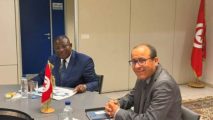
  • Cameroon looks to Tunisia’s textile model to develop its cotton value chain
  • Trump marks 80th birthday with White House UFC spectacle
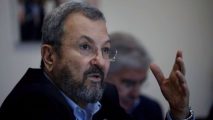
  • Ex-Israeli PM Ehud Barak says Netanyahu must be removed ‘with sticks and stones’
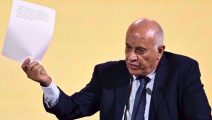
  • US denies visa to Palestine football chief for World Cup attendance

Archives

  • June 2026
  • May 2026
  • April 2026
  • March 2026
  • February 2026
  • January 2026
  • December 2025
  • November 2025
  • October 2025
  • September 2025
  • August 2025
  • July 2025
  • June 2025
  • May 2025
  • April 2025
  • March 2025
  • February 2025
  • January 2025
  • December 2024
  • November 2024
  • October 2024
  • September 2024
  • August 2024
  • July 2024
  • June 2024
  • May 2024
  • April 2024
  • March 2024
  • February 2024
  • January 2024
  • December 2023
  • November 2023
  • October 2023
  • September 2023
  • August 2023
  • July 2023
  • June 2023
  • May 2023
  • April 2023
  • March 2023
  • February 2023
  • January 2023
  • December 2022
  • November 2022
  • October 2022
  • September 2022
  • August 2022
  • July 2022
  • June 2022
  • May 2022
  • April 2022
  • March 2022
  • February 2022
  • January 2022
  • December 2021
  • November 2021
  • October 2021
  • September 2021
  • August 2021
  • July 2021
  • June 2021
  • May 2021
  • April 2021
  • March 2021
  • February 2021
  • January 2021
  • December 2020
  • November 2020
  • October 2020
  • September 2020
  • August 2020
  • July 2020
  • June 2020
  • May 2020
  • April 2020
  • March 2020
  • February 2020
  • January 2020
  • December 2019
  • November 2019
  • October 2019
  • September 2019
  • August 2019
  • July 2019
  • June 2019
  • May 2019
  • April 2019
  • March 2019
  • February 2019
  • January 2019
  • December 2018
  • November 2018
  • October 2018
  • September 2018
  • August 2018
  • July 2018
  • June 2018
  • May 2018
  • April 2018
  • March 2018
  • February 2018
  • January 2018
  • December 2017
  • November 2017
  • October 2017
  • September 2017
  • August 2017
  • July 2017
  • June 2017
  • May 2017
  • April 2017
  • March 2017
  • February 2017
  • January 2017
  • December 2016
  • November 2016
  • October 2016
  • September 2016
  • August 2016
  • July 2016
  • June 2016
Southern Cameroons Crisis: 2 gendarmes shot and Killed, CPDM militant injured as Amba Fighters ambush gov’t soldiers

19, November 2020

Southern Cameroons Crisis: 2 gendarmes shot and Killed, CPDM militant injured as Amba Fighters ambush gov’t soldiers 0

Two French Cameroun gendarmes were killed on Wednesday when their so-called mixed patrol was ambushed by Ambazonia Restoration Forces in Kissem a locality within Mbiame, in Bui County in the Northern Zone of Ambazonia.

A Cameroon government security source hinted our correspondent that a civilian loyal to the ruling CPDM crime syndicate was also shot in the chest. The regime in Yaoundé has dispatched defense minister Beti Assomo to Bamenda.

Cameroon Intelligence Report gathered that the mixed patrol was composed of soldiers from the 51st Mechanized Infantry Brigade in Bamenda and police officers.

 At least 600 soldiers and police officers have already lost their lives in the Southern Cameroons conflict.

According to the UN, 3000 people have been killed since the beginning of the armed conflict. The UN also estimates that some 700,000 people have been displaced by the crisis.

Hundreds of NGOs and humanitarian associations including the Cameroon Concord News Group have documented crimes, kidnappings, abductions, beheadings, mutilations, rapes, massacres of civilians by soldiers loyal to the Biya Francophone regime in Yaoundé.

On October 24, seven children, including one boy and six girls aged 9 to 13, were killed in a school in Kumba reportedly by armed men sponsored by Terrirorial Administration Minister Paul Atanga Nji.

The government attributed the massacre to armed separatists who clashed with the Defense and Security Forces and opposed the resumption of schooling in Southern Cameroons.

By Fon Lawrence in Bmenda

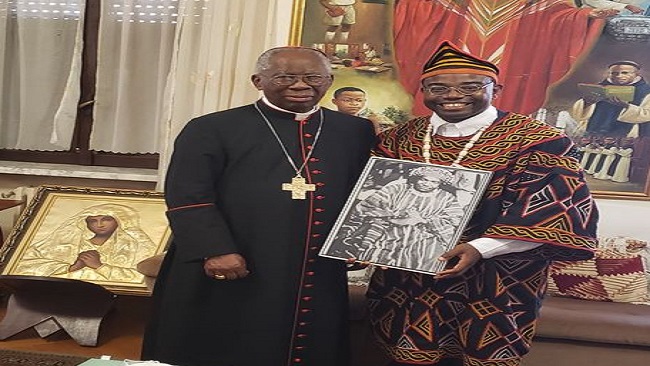
Treatise remembering Professor Bernard Nsokika Fonlon on the occasion of his 96th birthday

19, November 2020

Treatise remembering Professor Bernard Nsokika Fonlon on the occasion of his 96th birthday 0

This treatise is dedicated to Professor Bernard Nsokika Fonlon, M.A., Ph.D., (Nui) Dip. Ed. (Oxon), who was born 96 years ago, on 19 November 1924 in Nso, North West Region of Cameroon, died 26 August 1986. He was a government minister and leading intellectual of Cameroon. A man of diverse abilities, Fonlon was characterized as the Cameroonian Socrates. He was a major promoter of bilingualism, as reflected in the Journal Abbia: Cameroon Cultural Review that he founded in the early 1960s.

Dr. Prof. Bernard Nsokika Fonlon is the first English speaking Cameroonian to earn a Doctorate Degree in 1961 at the University of Ireland. The first French Cameroonian to earn a Doctorate Degree was Reverend Father Jean Zoa in 1953 in Biblical Studies at the Pontificia Universitas Urbaniana, in Rome, Italy. Prof. Dr. Fonlon did his secondary school education at Christ the King College, Onitsha Nigeria from 1942 to 1945. Later, he studied in Bigard Memorial Senior Seminary, Enugu, Nigeria from 1948 to 1953. He was among the pioneer seminarians at Bigard Memorial Senior Seminary in 1948, together with Monsignor Alphonsus Aghaizu, who happens to be the oldest living Monsignors in South-East Nigeria. He is presently 95 years old and is retired at St. Paul’s parish, Owerri. Fonlon’s one and only desire was to become a Catholic priest. Just before the sub-diaconate, Bernard experienced the greatest crisis of his life. He was informed that he would not be admitted to Major Orders, and that there was no likehood of that decision being changed in the future. This happened in November 1953 at Enugu, in Nigeria. In the midst of the darkness of that crisis, with his hopes for ordination completely shattered. Msgr. Aghaizu describes the scene on August 20, 2020 in his humble contribution to the cause for the beatification of his close friend Dr. Fonlon:“I was due for sub-diaconate ordination with Fonlon 1953 but he was dropped the morning of the ordination, but he maintained his cool, and went with me as previously arranged for a month’s holiday to Msgr. P. Meze’s parish at Maku. The authorities arranged for him to teach at C.K.C his alma mater (1942 to 1945). At my ordination at Uli 1954, Fonlon and three of his friends came from C.K.C to Uli despite the fact that there was ordination same day at Onitsha….After my month’s tour of the stations at Uli Parish, I was due to return to Bigard to obtain my faculties; and I decided to touch C.K.C enroute. I did not go to the Fathers House upstairs but to the teacher’s quarters to stay with Fonlon. Next morning, he followed me to the fathers Chapel and served my mass! The authorities were so impressed at this gesture that they gave him scholarship to study in Cork, Ireland”.

Thus, thanks to his exceptional gesture, between 1954-1961, Fonlon got a Scholarship [from a disappointment to a blessing], and studied at the National University of Ireland, Cork: studied under Professor E. Byrne Costigan, Prof. Drs O’Flaherty, Prof. Servais, Prof. Forgatton at Sorbonne, Paris; Fonlon also studied under Professor Georges Balandier Oxford University and under professor Halls. Had he become a priest, he would not have had the opportunity to serve his country as a Christian and intellectual in politicians as he did for Cameroon. God had other plans for him.

 Academic Qualifications of Fonlon

Fonlon earned the following Academic Qualifications: 1939: Primary School leaving Certificate; 1945: Senior Cambridge Grade One; 1946: The Nigerian Teacher’s Higher Elementary Certificate; 1957: B.A. Honurs, NUI Cork (2.1, Latin and French); 1958: M.A., NUI Cork (First, Thesis: Flaubert Ecrivain, a study of Flaubert’s style, written in French); 1960: Diploma in Education, Oxford University; Ph.D., NUI Cork (Thesis: Bernard Nsokika. La poesie et le reveil de l’homme noir / par Bernard Fonlon, published by Presses Universitaires du Zaire), an investigation into Negro African protest literature in English and in French (inclusing North America, the Caribbean, Africa and Madagascar. This was the the first Ph. D thesis in this field and was written in French under the auspices of professor W. McCausland Stewart (Bristol), Dr. Green (Oxford) and Professor E. Byrne Costigan (NUI Cork). This Ph. D was the first doctorate awarded to a Cameroonian in Ireland; 1986: D. Litt. (Honoris Causa), University of Guelph, Canada. With this extensive study, Fonlon earned three Academic Honours: 1). Nigeria – Patron of the Philosophical Fraternity of the University of Nigeria; 2). USA: Member of the National Geographic Society; 3). USSR: Awarded the Pushkin Medal in Moscow on the 170th anniversary of the birth of the celebrated Russo-African Writer.

 A Genuine and True Christian cum Intellectual in Politics

As far as his political life is concerned, Fonlon served as an interpreter to Amadou Ahidjo, the first Cameroonian President, and later was a Minister, in which he distinguished himself in politics with his moral, spiritual and intellectual life on returning to Cameroon. He held the following post in the Cameroon government: In 1961, he was assistant Secretary to the Prime Minister of the Southern Cameroons; 1961-1964: Charge de Mission (Presidential Aide) at the Presidency, Yaounde, Cameroon; 1964-1968: Deputy Minister of Foreign Affairs; 1968-1970. Minister of Transport, Posts and Telecommunications; 1970-1971: Minister of Public Health and Social Welfare; 1962-: Founder and Director of Abbia, the bilingual Cameroon Cultural Review; 1971: Associate Professor in the University of Yaounde.

Prof. Daniel Noni Lantum, “the right hand man” of Fonlon, who is said to have known Fonlon more than anybody else in Cameroon observes in his book titled: “Dr. Bernard Nsokika Fonlon: An Intellectual in Politics” that Fonlon was an indefatigable, relentless father of Cameroon Bilingualism at work, that Africanist intellectual and learned philosopher of the Presence Africaine up-bringing, that tireless professor of Negro-African Literature of the University of Yaounde from 1978 to 1984, that revolutionary Cameroonian Educationist of the 1960s, that inspiring and unquenching source of Liberty and Democracy even in the Ahidjo Regime (1958 – 1982), that Christian intellectual and politician who was physically present but spiritually absent from the materialism of the political environment of his time.

One of the circles in which Dr. Fonlon left an indelible mark was in politics. His involvement with Cameroon politics was natural as it was inevitable. He was motivated by a genuine desire to bring to the politics of his country the very best intellectual and moral qualities that he possessed, having passed through Bigard Memorial Senior Seminary, with a holistic formation: Intellectual, Spiritual, Pastoral and Human formation which equipped him for politics. It should be noted that Cameroon and indeed Africa was emerging from colonial enslavement to independence and such a critical period needed the best type of leadership that each country could provide. Dr. Fonlon who had foreseen this need and had prepared himself accordingly, believed that those who governed – and politics is to do ultimately with good government – should have the intellectual and moral preparation for such an important and sacred task. He believed with Socrates that “kings should be philosophers” or that those who govern should have the intellectual and moral qualities which true philosophy inculcates. With these principles which Fonlon learnt from Bigard, he distinguished himself in politics and earned eleven Political Honours: 1). Canada: The Canadian Medal; 2). Vatican: A Papal Medal, the Medal of the Concilium Oecumenicum Vaticanum 1 and 2; 3). France: The Medal Trois Siecles de Cartographie Francais; 4). USA: Medal of the African-American Dialogues; OAU: Medal Issued to the Participants of the First Congres of the OAU, 1963; 5). Chevalier de l’Ordre de la Valeur, Officier de l’Ordre de la Valeur; 6). Tunisia: The Order of the Tunisian Star; 7). Nigeria: The C.O.N. for Distinguished Public Service; 8). India: The Jawaharlal Nehru Medal; 9). Africa: Madale de Vermeil d’Union Africaine et Malgache des Postes et Telecommunications; 10). West Germany: Grosses Verdienstkreuz mit Stern und Schulterband; 11). Nso: Chieftaincy title, Shufai-wu-Ntu-Ndzev, conferred by the Fon of Nso, for having brought water to Kumbo, where he was born.

Nigerian Cardinal Francis Arinze states inter alia: “I hold Dr. Bernard Nsokika FONLON in very high regard. I first got to know him in Bigard Memorial Seminary, Enugu, Nigeria, in the years 1953 and 1954.  He was in his second year theology when I entered that Major Seminary in September 1953.  When he and his classmates were due to be ordained subdeacons in December 1954, the Seminary authorities and his Bishop decided not to admit him to major orders. As a seminarian, I saw Bernard as a learned seminarian.  I still remember how with lustre he sang “Audi Benigne Conditor” during Vespers in Lent.  He took no breakfast.  When other seminarians were at breakfast, he was studying, we believed he was at Latin and Greek! During holidays and in the years after he had to leave Bigard Memorial Seminary, he used to visit one of the Nigerian priests, Monsignor Peter Meze-Idigo who was very kind to him, as he also was to seminarians in general.  Once during those visits by Fonlon to Monsignor Meze at Dunukofia, my parish, I took Bernard to visit my parents at Eziowelle and my father, a good wine tapper, gave him good palm wine which he took gladly.  I still remember that my mother tried to converse with him in Igbo and was surprised that Fonlon did not speak Igbo.  I had to inform my innocent mother that Igbo is not the only language spoken in Africa!I lost track of Fonlon in the years when he worked for a Doctorate in Ireland and another Doctorate in France.  The next time I met him was during the Nigeria-Biafra war, probably in 1968 or 1969.  It was a quick meeting because we were both passengers in Air France flying to Paris from Douala.  At that time, Dr Fonlon was Minister of Communications in the Camerun and I was Archbishop of Onitsha. After that Nigerian civil war, I visited Dr Fonlon in Yaoundé.  It may have been around the year 1972.  I first visited Archbishop Paul Verdzekov in Bamenda.  Then I flew from Buea to Yaoundé.  Fonlon met me at the airport.  I stayed about two days with hm.  I then learned that he was no longer Minister in the Government because President Ahidjo called him and explained:  Bernard, I regret that we can no longer retain you in the cabinet because you put the rest of us ministers to shame, because you are your own driver and you drive an old car. My unforgettable memory of my stay with Fonlon in his flat was that one day his sister prepared a fou-fou lunch for both of us.  During lunch, Dr. Fonlon was so absorbed in our conversation (which was more me listening to his wisdom) that I finished my lunch; he then put together his fork and knife, put his plate aside and continued his learned discourse.   He forgot that he had not eaten anything yet!  I have never in my life of 87 years reached that level of detachment from creatures. On 16 Sept. 1973 he wrote a 28-page booklet:  “An Open Letter to the Bishops of Buea and Bamenda” on the training of future priests.  Excellent piece. Dr Bernard Nsokika Fonlon was a man of high ideals.  He prayed.  He said the Latin Breviary daily.  He loved the Church.  He was not bitter that he was not ordained priest.  In my view, it was an administrative mistake of his superiors that he was not ordained.  It seems to me that they did not understand him enough.  He was the type of professorial intellectual who may seem not the routine parish priest.  As a university priest, he could have answered many needs of the Church.  However, as a lay person, he also did much good. The Camerounians are the best placed to make a judgment on this.  He lived a celibate life.  When I visited him in 1972, I saw that he loved the Breviary. In my view, the Cause of Beatification of Dr. Bernard Nsokika Fonlon could be introduced.  I am happy to be writing these lines on this anniversary of his death. May he rest in the peace of Christ”.  + Francis Card. Arinze. Vatican City, 26 August, 2020.

Prof. Fonlon: Socrates in Cameroon

Fonlon is referred to as the Socrates in Cameroon. However, unlike Socrates, he wrote countless of articles. Although Professor Fonlon died in 1986 at the age of 62, he still lives on, and will do so for very many years to come in his writings, his goals, his noble deeds, and the shining example that he has left us. Dr. Fonlon was indeed a phenomenon so great that it will require many writers and many generations to fathom the depth of his profundity. His literary, intellectual and moral qualities made him a giant among Cameroonians, Nigerians and worldwide. He was a giant who was so much at ease and at home with the peasant villagers and the poor of slum “quartiers” of Yaoundé as he was among university dons of the greatest universities of Europe, North America and Canada. He was as comfortable among Archbishops, Cardinals and priests as he was among students. He knew personally and was friendly with several presidents and political figures of Post-independence Africa among whom one could cite Osagefor Kwame Nkruma of Ghana and Gamal Abdul Nasser of Egypt. Pierre E. Truddeau, Prime Minister of Canada, was a personal friend of Dr. Fonlon. In each of the many social circles or groups that Dr. Fonlon touched, he left an indelible mark and was admired, respected, and loved because he remained true to himself, sincere, generous, friendly, humble and simple.

 Message of Dr. Prof. Fonlon

Philosopher Dr. Tanju Fidel Kottoh, PhD, who happened to have been born on the day Dr. Fonlon died: August 26, 1986, writes: “What was the message of Professor Fonlon? Professor Fonlon’s message – and he was the very incarnation of the message – was the supremacy of a genuine intellectual life. This is what informed his heroic detachment from material fixations. In step with the Angelic Doctor, St. Thomas Aquinas, Professor Fonlon so believed in the primacy of the intellect that he saw genuine intellectual life as the surest panacea to the moral degradation that so potently lured the contemporary African youth. He described the ideal youth, whom he called the ‘genuine intellectual’ in the following words: ‘As Truth’s votary, ever faithful, ever sure, he is committed to wage lifelong warfare against falsehood. And as goodness and beauty are inherent in truth, it follows that he must be a constant seeker of the good and right and an inexorable and implacable of evil and wrong; and a devoted worshipper at the shrine of the beautiful and the sublime”. (Bernard Fonlon, The Genuine Intellectual, Buma Kor, Yaoundé 1978, 114). The Professor’s message was: virtue, knowledge and truth. He preached it vehemently in and out of season. But most importantly, he lived it. He himself was a paradigmatic expression of the heroic virtues he incessantly preached. His writing, teachings, encounters all attest to his desire to ‘walk the talk. ’ Above all, he was thoroughly humble. He said “it is my ambition to live the life of a simple man. The Professor’s humility was overwhelmingly evident”.

Fonlon’s cool and total dependence on Divine Providence is an attitude that ex-seminarians can emulate when they are asked to withdraw from Seminary formation. Fonlon left the Seminary without bearing any grudges. His maturity and attitude when he was dismissed is distinguished and should be emulated by ex-seminarians. Cardinal Christian Tumi, a former student of Bigard also notes in a recent interview conducted on Sunday, October 25 that Fonlon is a Saint because he did good and avoided evil. He also added that the fact that seminarians are in the seminary does not necessarily mean they must become priests, because in the course of the discernment, God might be calling them to other vocations. He challenged the seminarians never to withdraw from the Seminary on their own, but to allow the formators to ask them to withdraw. In addition, Dr. Fonlon lived the Heroic Virtues: Cardinal and theological virtues which are perquisites for the introduction of a cause of beatification. He lived the virtues of Justice in government, Prudence, Temperance and distinguished himself with the virtue of fortitude, include faith, hope and charity.

Fonlon is also an example of a lay person who took part completely in the Church. One reference to the Christian principle of life that was dear to him concerned the spirit of poverty, that is, detachment from whatever is not God. Writing to the Bishops of Buea and Bamenda in his Open Letter of 16th September 1973, on the occasion of the inauguration of the St.  Thomas Aquinas Major Seminary, Bambui, Fonlon said, inter alia: “In a world that is rank and rotten with materialism, where hedonism is the principle philosophy, where luxury is the summum bonum; there is the crying need for dedicated souls who would go to the other extreme and espouse the spirit of genuine religion, the spirit of poverty, the spirit of austere abstemiousness, in order to wage war against the onslaught of materialist godlessness”. Dr. Fonlon was buried as a priest. He lived a celibate life and lived the life of a priest, despite the fact that he was a lay person. He was buried very close to his friend: Fr. Aloysius Wankuy. The bishop who celebrated his funeral: Bishop Cornelius Fontem Esua stated: “Dr. Fonlon was an illustrious Christian, a man of great devotion and a priest at heart. He was a saintly man, and on account of this, regardless of who he was, I have decided to lay his mortal remains next to those of his closest friend, late Father Aloysius Wankuy…as a sign of our gratitude for his affection and deep attachment to the Church”. 

Dr. Tanju Fidel Kottoh, PhD, Philosopher observes: “Professor Fonlon was a vir probatus – a man whose unflinching devotion to virtue, knowledge and truth was evident and proven by an iconic lifestyle. His death, an event that eclipsed the ‘African intelligentsia and the entire elite of the Negro World’ is a reality that we must face up to. In the words of Professor Bongasu Tanla Kishani “we need to accommodate ourselves to the fait accompli and open our minds more than ever before to their messages”; referring to two legends: Professor Fonlon and Cheikh Anta Diop of Senegal. In the same way, he adds that “the world is in desperate need and arguably enthusiastically yearning for the manifestation of the Fonlons of our time; for the citizens of the world marked by an unrepentant commitment to virtue, knowledge and truth. As you continue reading this masterpiece, remember ‘talk is cheap. ’ Only a firm decision to emulate the heroic virtues you are about to discover/rediscover make your time worth its while. Relish every moment even as it energizes you into active participation in The Bernard Fonlon Revolution.” May his soul continue to rest in peace on the occasion of his 96th birthday celebration.

Written by Nchumbonga George Lekelefac
Ethiopia Crisis: Gov’t troops advancing toward capital of rebel-held region

19, November 2020

Ethiopia Crisis: Gov’t troops advancing toward capital of rebel-held region 0

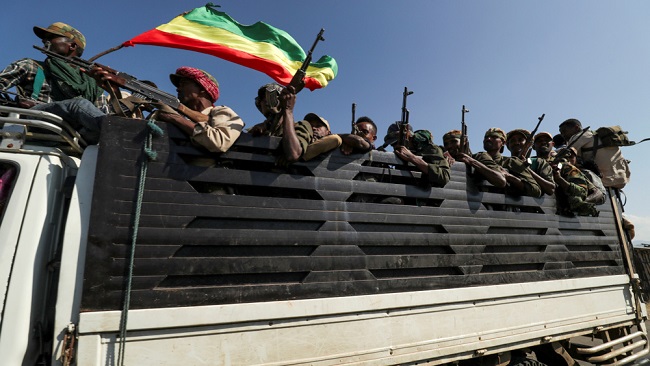
Ethiopian government forces have reportedly liberated two towns in the rebel-held northern region of Tigray and are further advancing to retake the regional capital, Mekelle, as violence continues to rage in the East African country for a second week.

Redwan Hussein, a spokesperson for the state of emergency task force, told CNN on Wednesday that the government forces had retaken the towns of Shire and Alamata and “are closing in [on Mekelle] but it will take about 100-200 km from several directions.”

The embattled leader of Ethiopia’s Tigray region has confirmed the losses, which he called a “temporary setback,” vowing to defeat the government.

Debretsion Gebremichael, leader of the Tigray People’s Liberation Front (TPLF), said his forces were inflicting “heavy defeats on all fronts” against Ethiopian forces, calling on all Tigrayans to mobilize and join the “struggle.”

Ethiopian officials have accused the TPLF of destroying four bridges on the road to Mekelle in an effort to stop government forces from advancing. The group has denied the claim.

Ethiopian Prime Minister Abiy Ahmed has vowed the mission would “save the country and the region from spiraling into instability.”

Abiy said on Tuesday that a three-day deadline given to rebel forces in Tigray to lay down their arms had ended, warning of a final push to retake Mekelle.

Source: Presstv

Largest shopping mall in CEMAC Zone opens in Douala

19, November 2020

Largest shopping mall in CEMAC Zone opens in Douala 0

The city of Douala, the economic capital of Cameroon hosts the largest mall in Central Africa. Already the public is keen on discovering the Douala Grand Mall.

The ultra-modern edifice is built on 40,000 m2 of which 18,000 m2 of commercial space is dedicated to entertainment, leisure and shopping.

“The shops are there, everything is in place. Really, I think it’s great for a first time in Cameroon, especially in Douala in our city. Really, it’s very warm and it’s very good. It really makes me happy’’, Honoré Tcheutchoua, Douala resident said.

Douala Grand Mall, which looks like a museum and an airport, will be home to 160 shops, supermarkets, amusement parks and cinemas. 300,000 visitors are expected every month, according to the promoters’ forecasts. The project cost 122 million euros.

“We are targeting the second phase of this project because phase two, which still includes a hotel and an office space, is still part of the complex. We have estimated that in its overall scope, we will generate around 4,500 direct and indirect jobs in all specialties,” Mathurin Kamdem is the promoter of the Douala Grand Mall.

Wearing a mask is mandatory, as measures are taken to curb spread of Covid-19. And the city municipality has also taken measures to limit environmental pollution due to the tons of waste that could be generated by the activities on this site.

The 2-tier Douala Grand Mall, which combines commerce and entertainment, has thus revolutionized retail trade in Cameroon.

Our Cameroonian correspondent, Lambert Ngouanfo reports that ‘’according to the promoters, this large shopping Centre has enabled the injection of 46 million euros into the local economy, through equipment purchases and payment of services. The Cameroonian State, which supports this project for private economic operators, plans to achieve a filling rate of at least 80% by the end of the year’’.

Source: Africa News

US: Vote recounts in Georgia and Wisconsin will likely not change Trump election defeat

19, November 2020

US: Vote recounts in Georgia and Wisconsin will likely not change Trump election defeat 0

President Donald Trump’s attempts to cling to power appeared more tenuous than ever on Wednesday as election officials in Georgia said a soon-to-be-completed recount was not likely to change President-elect Joe Biden’s victory there.

Georgia is one of several states where Trump’s campaign is contesting election returns, so far without success. Election officials there said recount results due to be announced on Thursday were not likely to overturn Biden’s 14,000-vote victory in the state. They also said the recount would not provide evidence for Trump’s unsupported claims of widespread fraud.

“He’s been misinformed on that front,” Gabriel Sterling, the state’s voting system manager, told reporters.

Election officials in Wisconsin likewise said that a partial recount requested by the Trump campaign would not reverse the Republican incumbent’s loss in that state, which he won in 2016.

Trump himself has stayed out of the public eye while venting his anger on Twitter. His election-related lawsuits in Pennsylvania, Nevada and Michigan have met with little courtroom success.

Trump’s refusal to concede the Nov. 3 election is blocking the smooth transition to a new administration and complicating Biden’s response to the coronavirus pandemic when he takes office on Jan. 20.

Opinion polls show Trump’s unfounded claims about the election having been “rigged” have a political benefit, with as many as half of Trump’s fellow Republicans believing them, according to a Reuters/Ipsos poll.

Arizona’s top election official, Democratic Secretary of State Katie Hobbs, said she faced escalating threats of violence and blamed Trump for spreading misinformation to undermine trust in the results.

The president is holding out hope that a manual recount ordered by Georgia can erase Biden’s lead there. The state’s top election official said that was unlikely.

“I don’t believe at the end of the day it’ll change the total results,” Georgia Secretary of State Brad Raffensperger, a Republican, told CNN.

As of Wednesday morning, Biden’s lead over Trump had fallen to 12,781 ballots, down from 14,156 previously, according to Sterling, the state voting system manager. Sterling said he expected the recount to be completed by midnight EST on Wednesday (0500 GMT Thursday) and certified by the state on Friday.

In Wisconsin, the state Elections Commission said it would oversee recounts in two heavily Democratic counties – Milwaukee and Dane, which includes Madison – after the Trump campaign paid $3 million, less than the $7.9 million estimated cost of a statewide recount.

Dane County Clerk Scott McDonell said a recount would start on Friday and finish within days. He said the recount would probably not change the tally significantly. “Certainly nothing anywhere near what would be required for changing the outcomes,” he said.

Biden won Wisconsin by more than 20,000 votes to lead Trump 49.5% to 48.8%.

In the state-by-state Electoral College that determines the election winner, Biden captured 306 votes to Trump’s 232. He won the popular vote by more than 5.8 million.

To remain in office, Trump would need to overturn results in at least three large and closely competitive states to reach the threshold of 270 electoral votes. That would be unprecedented.

False claim on Detroit

Trump is also challenging results in Michigan, falsely claiming on Wednesday that the number of votes in Detroit had surpassed the number of residents. The largest city in the state is heavily Democratic.

“In Detroit, there are FAR MORE VOTES THAN PEOPLE. Nothing can be done to cure that giant scam. I win Michigan!” he tweeted.

City records show that 250,138 votes were cast there in the presidential election. That is a little more than a third of the city’s population, which according to the U.S. Census Bureau is 670,031.

The state’s top election official said all counties, including Detroit’s Wayne County, had certified their tallies.

In Pennsylvania, Trump’s campaign sought to reintroduce claims to a lawsuit it dropped three days ago that alleged that Republican observers were not allowed to watch ballot counting. Lawyers said they had dropped the claims because of miscommunication.

Earlier in the day, the state Supreme Court said it would hear an appeal in a separate case challenging thousands of mail-in votes in Philadelphia.

Biden held a virtual meeting on Wednesday with frontline healthcare workers in Delaware who complained about a lack of personal protective equipment and COVID-19 tests for themselves.

He warned that the delay in declaring him the election winner could mean that “soon we’re going to be behind by weeks or months being able to put together the whole initiative” to distribute coronavirus vaccines when they become available.

The General Services Administration agency, run by a Trump appointee, has yet to formally declare an election winner. Biden’s team says that is hindering coordination with the current White House coronavirus task force.

States face a Dec. 8 deadline to certify election results in time for the official Electoral College vote on Dec. 14.

Congress is scheduled to count the Electoral College votes on Jan. 6, which is normally a formality. But Trump supporters in the Senate and House of Representatives could object to the results in a final, desperate attempt to deprive Biden of 270 electoral votes and turn the final decision over to the House.

Election officials from both parties, across the United States, have said there is no evidence of vote tampering, and a federal review drew the same conclusion.

Source: REUTERS

Southern Cameroons: The world’s most neglected crisis

19, November 2020

Southern Cameroons: The world’s most neglected crisis 0

The peaceful protests that started in 2016 in Cameroon’s English-speaking Northwest and Southwest regions, over institutional marginalisation and underinvestment, mutated into violence and have now turned bloodier with no end in sight.

This year has been the bloodiest of the conflict. On 24 October, unknown attackers wielding guns and machetes stormed the Mother Francisca International Bilingual Academy in Kumba, in the troubled Southwest Region, and slaughtered seven schoolchildren under the age of 14. The brazen attack left several other students injured, with blood splattered all over the school’s campus. Cameroon’s government has blamed Anglophone separatists for the attack even though no group has claimed credit for it.

The killing attracted widespread international condemnation, with Pope Francis saying, “I feel great bewilderment at such a cruel and senseless act, which tore the young innocents from life while they were attending lessons in school.”

Cameroon President Paul Biya addressed the attack only two days later, condemning the act while announcing that he has “instructed that appropriate measures be taken diligently to ensure that the perpetrators of these despicable acts are apprehended by our defence and security forces and brought to justice”.

Felix Agbor Nkongho, a human rights lawyer and president of the Centre for Human Rights and Democracy in Africa (CHRDA), was quoted as saying, “This incident is another episode to add to the countless horrific and gross violations of human rights and international law in our war-affected region.” The CHRDA has been documenting the atrocities committed by government forces as well as separatist fighters who are seeking to create a breakaway state from Cameroon called Ambazonia.

According to the CHRDA, more than 4 000 people have been killed and close to half a million displaced since Cameroon’s Anglophone crisis started in 2016. Most of the clashes and killings they documented happened this year.

The spark of the separatist war was lit in November 2016 when English-speaking Cameroonians protested against French-majority rule in their regions. The Cameroon Anglophone Civil Society Consortium, an organisation that consisted of lawyer and teacher trade unions, went on strike in protest against French-speaking judges being appointed in the Anglophone region. The government has mainly responded with violence.

A bloody year 

On 14 February, while the rest of the world was celebrating Valentine’s Day, a mass killing took place in Ngarbuh, a village in Northwest Region. Soldiers were searching for separatist fighters and in the course of the operation killed at least 21 people, including 13 children and a pregnant woman. The government did not immediately admit that its soldiers had carried out the attack.

It dismissed the claims from eyewitnesses and Human Rights Watch as “terrorist propaganda”. The state only admitted that its soldiers carried out the massacre in April 2020, when it published a finding saying it had identified three soldiers and they would be punished.

Despite this, the country’s military killed four unarmed young men in Buea, the regional capital of Southwest, on 28 May. Their crime was smoking cannabis in an “uncompleted building”. Buea, once the governmental seat of the defunct West Cameroon (English Cameroon in the Federal Republic of Cameroon, 1961-1972), has been under heavy military surveillance since the crisis broke out in 2016.

25 October 2020: A puddle of blood in an empty classroom after the Kumba school shooting

In that same month, a 44-year-old farmer in the small Southwest village of Manyemen was caught in the crossfire. Anglophone rebels pulled him and other passengers out of their car and beat them up for wearing face masks, saying they were spreading Covid-19 in the rebels’ area of command. While they were on the ground, begging the fighters to let them continue their journey to the farm, government defence forces arrived and started shooting from a distance. The rebels ran into the bush while the farmer, who struggled to find a shield, was shot in the legs and waist.

Then the bloodiest month of 2020 came. In August, seven unarmed civilians were killed in a military raid; a teacher was murdered for not respecting separatist-imposed ghost towns, where no one is allowed to work; an aid worker was slain for publicly denouncing separatist activities; and 35-year-old Comfort Tumassang, a mother of four, was beheaded and her body left on the street in Muyuka, Southwest. Tumassang’s beheading was captured on video.

“It flies in the face of humanity for us to accept these abuses as the new normal. There must be accountability,” Nkongho told Human Rights Watch.

Why so much violence?

Dibussi Tande, a Cameroonian political scientist and leading source of news and analysis about the country who is now based in the United States, said disbanding the Cameroon Anglophone Civil Society Consortium in 2017 gave power to Anglophone extremists.

“If the government had not followed that path, where they basically sidelined the moderates and left the field open for hardliners to step in, we wouldn’t be where we are today,” he said.

“What is happening in Cameroon is not different from any classic rebellion that we’ve seen around the world, whether it’s in Central America, Asia or Africa,” added Tande, who recently co-edited Bearing Witness: Poems From a Land in Turmoil, a volume of poetry that captures the sufferings of Anglophone Cameroonians in the war.

11 May 2019: A man points to what is left of his house near Buea after Cameroonian military forces burnt it down in January 2019. 

“In 2017, for example, those forces, those initial Ambazonia forces, were people who were within a structure. What has happened [now] is that you have local groups that have sprung up. They don’t deal with anybody but about their local environment. And there are so many groups that have spread all over, that there is no command and control structure. So people are reacting to local events.”

Separatist leader Sisiku Ayuk Tabe was arrested in 2018 in Nigeria before being returned to Cameroon, where he has been in custody since then. “There’s a lack of control. I can assure you that more than half of the people called Ambazonians are really criminal gangs doing their stuff. If you ask them who is Ayuk Tabe, they would probably look at you, like, Ayuk who? These are gangs fighting for territory, fighting for control,” Tande said.

Cameroonians creating awareness online 

Before the Kumba school massacre, Cameroonians had started using the hashtag #EndAnglophoneCrisis on Twitter to inform the world of the separatist war that is affecting three million of the country’s 27 million people.

African tech entrepreneur Rebecca Enonchong, who comes from the Anglophone part of Cameroon, has been lending her voice to the call to end the crisis.

4 October 2018: Grace Nah near the house in Yaounde where she has taken refuge. The 70-year-old fled the violence in the northwestern division of Momo. 

“I have done a number of threads in the past on the historical reasons for the conflict, but people are more receptive now. Many are hurting and they sincerely want to understand and do what they can to help end the conflict,” she said.

French football star Kylian Mbappé, whose father is Cameroonian, also tweeted about the crisis. The aim of the hashtag is to inform the international community of the gravity of the conflict, hoping that it will move beyond simply condemning the violence. But Tande, who has written many essays on Cameroon’s political life, said institutions outside the country can’t do much.

“In international relations, countries don’t have friends, they have interests. What, concretely, can the United States do other than what it’s doing now, condemning, putting diplomatic pressure, cutting off symbolic military aid and stuff like that? This is not Nigeria. Even in Nigeria, they haven’t done much. This is not Israel. This is not some major country. Cameroon happens to be that kind of middle-of-the-road country where it is there, but it is not really noticeable. There is very little significance of the Anglophone crisis on world geopolitics,” Tande explained.

Culled from New Frame

Cameroon’s unwinnable war: Biya continues to rely on a small set of Francophone generals and military advisors

18, November 2020

Cameroon’s unwinnable war: Biya continues to rely on a small set of Francophone generals and military advisors 0

As the Cameroonian army struggles to find a way out of the crisis that has gripped the country for the past three year the so-called commander-in-chief continues to rely on a small set of Francophone army generals and military advisors.

The securocrats are indeed guiding Biya’s decisions on the crisis in Southern Cameroons, reports Africa Intelligence.

At the heart of the crisis, which started in 2016, was a strike by teachers and lawyers, in the English-speaking regions of Cameroon.

The professionals, supported by citizens of their areas, protested the unfair use of the French language and unjustified appointments of French speakers in their territories.

Cameroon is a bilingual country. By 2017, the situation had spiralled out of control and developed into a fully-fledged separatist war. Both government forces and separatists are now bogged down in a conflict, that observers say, can only be resolved through dialogue.

By Asu Vera Eyere in the UK

US Congressmember Introduces Resolution Urging Halt Of Cameroonian Deportations

18, November 2020

US Congressmember Introduces Resolution Urging Halt Of Cameroonian Deportations 0

Congressmember Karen Bass (D-CA), Chair of the House Foreign Affairs Subcommittee on Africa, along with 52 other Members of Congress, introduced a resolution urging for the halt of deportations to Cameroon.

“The United States must uphold its commitments under international treaties related to refugees and asylum-seekers and halt deportations of Cameroonian citizens,” said Congressmember Bass. “Many of the individuals who were deported last week were allegedly improperly coerced to sign voluntary deportation orders. Upon their arrival in Cameroon, many will be at imminent risk of death. To do this while we are transitioning between administrations is outrageous and unacceptable. I urge my colleagues to support this resolution.”

On November 10, Congressmember Karen Bass (D-CA), Chair of the House Foreign Affairs Subcommittee on Africa, along with Congressman Bennie Thompson (D-MS), Congresswoman Shelia Jackson-Lee (D-TX), Congresswoman Judy Chu (D-CA), Congressman Joaquin Castro (D-TX), and Congressman Jamie Raskin (D-MD) issued the following joint statement:

“Our offices have been alerted that African asylum-seekers from Cameroon and other African countries, many of whom were allegedly improperly coerced by ICE to sign voluntary deportation orders, will be deported as early as tomorrow morning. Upon their arrival to their designated countries, many will be at imminent risk of death. Their deportation should be put on hold until the new administration is sworn in and able to carefully review these claims. Anything otherwise is outrageous and unacceptable. We plan to introduce a measure this week to condemn this deportation should it take place. The United States should uphold its commitment under international treaties related to refugees and asylum-seekers and halt this unjust deportation.”

Source: The Street Journal

CPDM Crime Syndicate merges Sodecoton & Cicam to boost textiles

18, November 2020

CPDM Crime Syndicate merges Sodecoton & Cicam to boost textiles 0

The government of the central African country of Cameroon has announced a strategic merger of Société de développement du Coton (Sodecoton) and Cotonnière Industrielle du Cameroun (Cicam) to boost the country’s cotton textiles industry. The merger is part of the government’s 2020-30 National Development Strategy, which includes revival of the leather sector.

Sodecoton organises the production and marketing of cotton in Cameroon, while Cicam specialises in the manufacture of 100 per cent cotton loincloths and towels.

Within the framework of the National Development Strategy, the government aims to increase the country’s cotton production to 600,000 tons a year by 2025.

The strategy also aims to increase the volume of local cotton use by the domestic industry to 50 per cent by 2030. The cotton will be used for making apparel, particularly sportswear, and is expected to meet around 50 per cent of Cameroon’s clothing demand.

The garments produced using at least 60 per cent of local cotton will be supplied to the military, police and other government departments, according to Cameroon media reports.

Biya regime tightens security in Yaounde following repeated blasts

18, November 2020

Biya regime tightens security in Yaounde following repeated blasts 0

Security forces are stepping up security precautions in Cameroon’s capital Yaoundé following recurrent blasts in the city, a government official said on Monday.

“For some time now, we have been living with the phenomenon of explosive devices in the city of Yaoundé. We have not had this kind of thing before. We have taken more adequate measures to fight the phenomenon,” Naseri Paul Bea, governor of the Centre Region told reporters in Yaounde.

“All bags will be systematically checked in the city because we have realised that the explosive devices are carried in bags. All bags are banned in drinking spot. We have asked everyone to always have their ID cards on them,” he added.

He also directed community leaders to create community defense forces, or vigilante groups that can collaborate with security forces to fish out the criminals.

“The participation of the population in the security measures is very important. We cannot have a police officer behind every Cameroonian, so the population has to be vigilant and collaborate with security forces,” Bea said.

According to security reports, there have been over 10 attacks from improvised explosive devices in the capital since the start of the year. No deaths have been reported so far.

Source: Xinhuanet

«< 603 604 605 606 607 >»

Featured

  • Exam leaks in CPDM Cameroon: A symptom of a deeper corruption crisisExam leaks in CPDM Cameroon: A symptom of a deeper corruption crisis
  • Biya is already in Hell as Yaoundé unravelsBiya is already in Hell as Yaoundé unravels
  • What does President Biya really want? Money, women or cigarettes?What does President Biya really want? Money, women or cigarettes?
  • Biya, how long must the nation wait for the government it was promised?Biya, how long must the nation wait for the government it was promised?
  • Cameroonians in Leicester: funeral contributions must never become a marketplace for corruptionCameroonians in Leicester: funeral contributions must never become a marketplace for corruption

Most Commented Posts

  • 4 Anglophone detainees killed in Yaounde4 Anglophone detainees killed in Yaounde
    18 comments
  • Chantal Biya says she will return to Cameroon if General Ivo Yenwo, Martin Belinga Eboutou and Ferdinand Ngoh Ngoh are sackedChantal Biya says she will return to Cameroon if General Ivo Yenwo, Martin Belinga Eboutou and Ferdinand Ngoh Ngoh are sacked
    13 comments
  • The Anglophone Problem – When Facts don’t LieThe Anglophone Problem – When Facts don’t Lie
    12 comments
  • Anglophone Nationalism: Barrister Eyambe says “hidden plans are at work”Anglophone Nationalism: Barrister Eyambe says “hidden plans are at work”
    12 comments
  • Largest wave of arrest by BIR in BamendaLargest wave of arrest by BIR in Bamenda
    10 comments

Latest Tweets

→ Follow me

Featured

  • American musician Oliver Tree killed in mid-air helicopter collision in Brazil

    American musician Oliver Tree killed in mid-air helicopter collision in Brazil

  • Cameroon looks to Tunisia’s textile model to develop its cotton value chain

    Cameroon looks to Tunisia’s textile model to develop its cotton value chain

  • Trump marks 80th birthday with White House UFC spectacle

    Trump marks 80th birthday with White House UFC spectacle

  • Ex-Israeli PM Ehud Barak says Netanyahu must be removed ‘with sticks and stones’

    Ex-Israeli PM Ehud Barak says Netanyahu must be removed ‘with sticks and stones’

  • US denies visa to Palestine football chief for World Cup attendance

    US denies visa to Palestine football chief for World Cup attendance

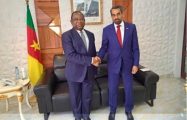
  • Yaoundé, Abu Dhabi explore new trade and investment framework

    Yaoundé, Abu Dhabi explore new trade and investment framework

  • Southern Cameroons Crisis: 2 gov’t soldiers killed in Ambazonia ambush

    Southern Cameroons Crisis: 2 gov’t soldiers killed in Ambazonia ambush

Log In

  • Register
  • Log in
  • Entries feed
  • Comments feed
  • WordPress.org
© Cameroon Concord News 2026

We are using cookies to give you the best experience on our website.

You can find out more about which cookies we are using or switch them off in .

Powered by  GDPR Cookie Compliance
Privacy Overview

This website uses cookies so that we can provide you with the best user experience possible. Cookie information is stored in your browser and performs functions such as recognising you when you return to our website and helping our team to understand which sections of the website you find most interesting and useful.

Strictly Necessary Cookies

Strictly Necessary Cookie should be enabled at all times so that we can save your preferences for cookie settings.

3rd Party Cookies

This website uses Google Analytics to collect anonymous information such as the number of visitors to the site, and the most popular pages.

Keeping this cookie enabled helps us to improve our website.

Cookie Policy

More information about our Cookie Policy