28, March 2026
Iran weighing withdrawal from NPT after US-Israel attacks on nuclear sites 0
Iran is reportedly considering its withdrawal from the Treaty on the Non-Proliferation of Nuclear Weapons (NPT) after the United States and Israeli regime carried out attacks on the country’s nuclear sites.
A number of institutions in Iran, including the Parliament, are urgently reviewing the issue of the country’s withdrawal from the NPT, Tasnim news agency reported on Saturday.
It is becoming firmly established in Iran that there is no justification for remaining in the NPT, it added.
According to the NPT, the International Atomic Energy Agency (IAEA) must provide conditions for the protection and support of Iran’s access to peaceful nuclear technology and its equipment, it noted.
However, it said, when IAEA Director General Rafael Grossi implicitly encourages the enemy to attack Iran’s facilities, and the US and Israel carry out such attacks without any hindrance or condemnation from the IAEA, there remains no justification for Iran to stay in the NPT.
The report emphasized that withdrawal from the NPT does not mean moving towards nuclear weapons; rather, it is about “preventing the continuation of spying by the US and Israel under the guise of IAEA inspectors.”
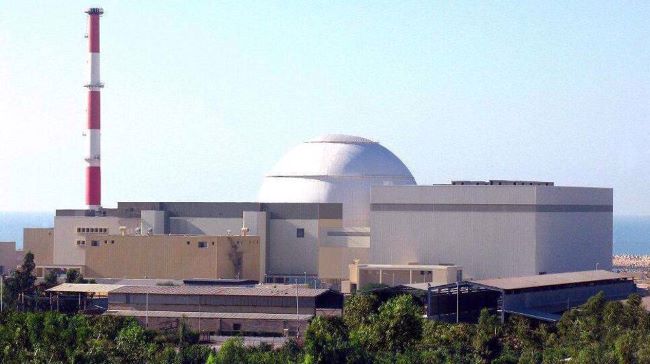
In a statement released on Friday, the Atomic Energy Organization of Iran (AEOI) confirmed that the Bushehr Nuclear Power Plant had been struck by a projectile, marking the third attack on the facility.
The AEOI added that the projectile hit the plant earlier in that day, saying initial reports indicated that the incident caused no human, financial, or technical damage.
The US and Israel also targeted the Khondab heavy water complex in the central Iranian city of Arak on Friday for the second time after they attacked the complex during the 12-day war last June.
Also on Friday, they carried out a strike against a yellowcake production facility in the city of Ardakan in the central province of Yazd.
Iran has repeatedly emphasized that targeting peaceful nuclear facilities constituted a clear violation of international regulations and obligations regarding the immunity of such sites from military attacks.
Source: Press TV

















29, March 2026
Arab states hosting US bases forfeit sovereignty, can’t challenge Iran’s self-defense 0
Arab states in the Persian Gulf region hosting permanent US military bases no longer meet the legal definition of fully sovereign nations and therefore have no standing to object to Iran’s right to defend itself against American aggression, says a lawyer.
Reza Nasri, an international lawyer and foreign policy analyst, citing black-letter international law, in a post on X, said countries including Saudi Arabia, Qatar, Bahrain, Kuwait, the United Arab Emirates, and Jordan have effectively surrendered a core attribute of statehood: the exclusive capacity to enter relations with other states.
Nasri based his argument on Article 1 of the 1933 Montevideo Convention on the Rights and Duties of States, which defines a sovereign state by four cumulative criteria: a permanent population, a defined territory, a government, and — crucially — “the capacity to enter into relations with other States.”
Drawing on landmark international arbitrations such as the Island of Palmas case (1928) and the Lotus case (1927), Nasri emphasized that this capacity requires exclusive and independent authority over territory and external affairs, free from subordination to any other external power.
According to Nasri, the permanent presence of US military bases under Status of Forces Agreements (SOFAs) systematically strips host Arab states of that exclusivity.
These agreements typically grant US forces extraterritorial immunity, exclusive operational command, and control over significant areas of sovereign territory.
“Local courts cannot prosecute US personnel,” Nasri noted. “Local legislatures cannot inspect bases. Host governments cannot unilaterally order eviction without risking severe economic or military retaliation.”
He further said that CIA operational centers embedded within or alongside these bases conduct intelligence, surveillance, rendition, and lethal activities beyond any effective Arab oversight.
“A state that cannot control who bears arms on its soil, who conducts intelligence operations, or who decides when foreign forces depart has, by definition, surrendered the exclusivity of authority required by Montevideo,” Nasri stated.
The analyst further remarked that these states have become, in legal terms, “semi-sovereign protectorates, leased territory, or modern vassals in all but name.”
Having voluntarily or under duress forsaken the fourth Montevideo criterion, they cannot invoke the full protections of sovereign equality under the UN Charter (Article 2(1)) or the principle of non-intervention (Article 2(7)) — particularly against the very power whose bases they host, he asserted.
Nasri asserted that Arab host states lack standing to object when Iran exercises its inherent right of self-defense against American aggression emanating from bases on Arab soil.
“Symbols of statehood such as flags, UN membership, and national anthems confer no genuine sovereignty when the fundamental attributes of independence have been surrendered,” he said. “Least of all the standing to object when Iran exercises its inherent right of self-defense against American aggression emanating from bases on Arab soil.”
His remarks come as tensions continue to rise in the Persian Gulf region over the complicity of some Arab states in the American-Israeli war of aggression against Iran.
Iranian armed forces have in recent weeks carried out waves of retaliatory missile and drone strikes targeting American bases and assets across the region.
Iran had previously warned the regional countries against allowing their soil or airspace to be used for any act of aggression against the Islamic Republic.
Source: Press TV