25, June 2018
That Depressing Amnesty International report on the Anglophone Crisis 0
The rather combative government riposte to the Amnesty report was an unnecessary own goal that sullies and casts aspersion on Cameroon’s image before the international community.
The alarm bell sounded by Amnesty International on the vicious cycle of violence currently taking place in the Anglophone regions is hardly surprising, coming as it were amidst the grotesque campaign of human savagery and barbarism by murderous nihilistic soldiers, responsible for the brutal killing of hundreds of innocent Anglophones and burning down over 100 villages till date. In its latest report, the London-based human rights group said “security forces have tortured people, fired on crowds and destroyed villages, in a spiral of violence that keeps getting more deadly.” Amnesty said security forces have tortured at least 23 people, including minors to extract confessions, while Ambazonia fighters have killed at least 44 security forces and targeted suspected Anglophone sympathizers of the Biya regime. The report is bound to cause consternation within and outside Cameroon with adverse consequences for the army chain of command, including President Biya as commander-in-chief, who risks potential criminal liability for individual or command responsibility for war crimes of murder, torture, extra-judicial executions and enforced disappearances. It is certainly impossible to live down the damning report, but the combative government riposte of dismissing the report as biased;accusing AI of hostility is an unacceptable impudent display of statecraft. Any effort to discredit AI will instead attract global opprobrium against Cameroon, which might inevitably lead to the nation’s military and political leaders being dragged to the International Criminal Court (ICC) at The Hague for prosecution.
Titled: “A turn for the worse: Violence and human rights violations in Anglophone Cameroon,” the report which is based on in-depth interviews with victims and eye-witnesses, and material evidence including satellite images, documents how Anglophones are paying the highest price as violence escalates in the North West and South West regions. The report details a range of war crimes and possible crimes against humanity committed by security forces deployed to counter the Anglophone insurgency. Amnesty particularly noted that: “People in Cameroon’s Anglophone regions are in the grip of a deadly cycle of violence. Security forces have indiscriminately killed, arrested and tortured people during military operations which have also displaced thousands of civilians.”
According to the report, victims described being blindfolded and severely beaten with sticks, ropes, wires and guns, as well as being electrocuted and burnt with hot water. Some were beaten until they lost consciousness, and Amnesty documented that at least one person died in custody. One man who was arrested on December 13, 2017 in Dadi gave a harrowing account of the torture he suffered: “… They tied our hands behind our backs, gagged us and tied our faces with our towels and shorts, which they tore. They then made us lie in the water, face down for about 45 minutes… During three days, they beat us with shovels, hammers, planks, and cables, kicked us with their boots and poured hot water on us… when I tried to move and shouted, one of them used the cigarette he was smoking to burn me.”
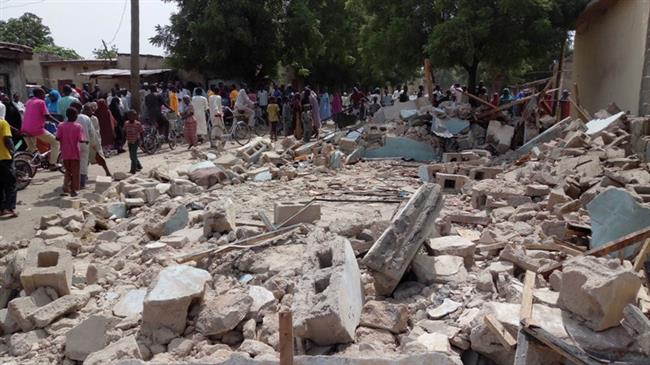
AI said satellite images and photographic evidence show the complete destruction of Anglophone villages, burned to the ground by soldiers in response to the killing of security officers by Ambazonia forces. “In some cases, following these security operations, people were arbitrarily arrested and tortured while detained in illegal detention facilities and in secret. For instance, at least 23 people, including minors, arrested in Dadi village in Akwaya by security forces, spent three days incommunicado during which, they were tortured to extract confessions of supporting the separatists. “In another instance, the bodies of four men, arrested in Belo by the security forces the day before, were found bloodied; with signs of torture at the Bamenda regional hospital mortuary,” AI noted.
The Amnesty report epitomizes, in a dramatic fashion, the rampaging culture of impunity in the army. It is indeed a tragedy that the nation’s military would be accused of such egregious human rights violations that cast the country negatively in terms of moral accountability and respect for the rule of law. That the army could be accused of war crimes and crimes against humanity, hints of an imprudent display of lawlessness.That security forces, whose prime responsibility is the protection of lives and property should be accused of having the blood of many civilians on their hands, is neither edifying to the military, nor the nation. It is one more embarrassment that Cameroon can do without.
The report also reflected the heightened state of impunity and indecorous professional conduct in military circles.The images of torture and systemic abuse of Anglophones in secret detention centers, which have gone viral on social media, advertised a certain violation of even the basic rules of war, which exposed a breakdown in the leadership command chain. Notwithstanding the situation, as the ethos of modern democracies demand, the military cannot operate outside the law. This is what makes the excesses documented in the report, all the more puzzling!
Be that as it may, the Amnesty report was also an unwholesome expression of the helplessness of the commander-in-chief. All in all, the impression created is that President Biya, as commander-in-chief has been taken hostage by the army chiefs and their cohorts who are profiteering from the crisis. This being the case, the import of the report is for Biya now to take effective action to protect the Anglophone population against the army’s campaign of terror within the boundaries of the rule of law; to change the scorched-earth strategy for handling the Anglophone crisis by discarding the indiscriminate use of brutal force that inevitably creates a vicious cycle of violence.
Rather than dismiss the Amnesty report as a grossly impaired document that is baseless and not grounded in facts, President Biya should take the opportunity to restore the rule of law and engage in genuine dialogue with the Ambazonia leadership. Peace will not be achieved unless the culture of impunity among the security forces is broken and Cameroon outlaws torture. The military high command must be investigated for sanctioning or failing to prevent the torture and deaths of people in their custody, arrested in the counter-insurgency operations. The soldiers certainly have no reason to raze villages and kill innocent civilians, including a 96-year-old bed-ridden woman, burnt to death by soldiers in Kwa kwa. If things went wrong in the past, this is the time to correct them.
Mr. President may find it necessary, as an image boosting measure, to commit his government’s willingness to conduct a thorough investigation into all the allegations with a view to determining the truth, sanctioning those culpable, and preventing a recurrence. The government must, as a matter of urgency, set the record straight with verifiable data of the number of detainees in various detention cells, the charges preferred against them, the status of their prosecution and the number of those that have died in custody. The government can continue to wallow in self-delusion, but the obstinate refusal to dialogue with the Ambazonia leadership, and the misguided demonization of Ambazonia forces as terrorists will neither end the insurgency nor repair Cameroon’s battered international image.Despite all the rampage, the army has been struggling to counter the Ambazonia fighters. The soldiers remain on the defensive.
Amnesty is however unequivocal that these breaches including torture, extrajudicial executions and detention without trial, including the trail of blood and death wherever the army appears, can only make an already desperate situation worse. In AI’s view, “the government’s heavy-handed response will do nothing to calm the violence – in fact it is likely to further alienate Anglophone communities and fuel further unrest,” noted Samira Daoud, Amnesty Deputy Director for West and Central Africa. Amnesty concluded by saying: “Authorities must ensure accountability for crimes committed by the security forces as well as by the armed separatists. They must immediately end the use of unlawful, unnecessary and excessive force and ensure that people are protected.” Mr. President should create a commission of inquiry with parliamentary oversight to undertake an independent investigation not just of the Amnesty report; but the entire anti-Anglophone counter-insurgency operation to ensure security forces operate within the rule of law and with respect for the rights of citizens. The report of such an enquiry should be made public and those found to have compromised service integrity made to face the full wrath of the law. That is what is expected of any responsible government confronted with such grievous allegations.Trying to kill the messenger because the government hates the message is a self-defeating strategy.
By Ekinneh Agbaw-Ebai











25, June 2018
Sasse Old Boys: SOBA UK Secretary General says the national body needs a decent man to run its affairs 0
Press Statement: Update on Decisive Action(s) taken against the splinter group of SOBA UK
Fellow Sobans, On 24th February 2018, the members of the SOBA UK General Assembly convened and voted unanimously to:
a) reject calls for fresh elections in the UK by SOBA General in Cameroon and,
b) take necessary actions to redress any infringement of the SOBA UK trade marks.
We repeat that SOBA UK has for some time now been the subject of sustained attack from the activities of members of the splinter group purporting to be SOBA UK, which is a clear infringement of our intellectual property and disregard for the already well established association in the United Kingdom.
Exactly two weeks ago on 8th June 2018 we informed you that the Executive of SOBA UK had commenced decisive action against certain individuals of the splinter group. We outlined specific activities that demonstrated bad faith, opportunism and collusion with key elements of SOBA General in Cameroon, notably Prof Ephraim Ngwafor and Mr Ebot Mfoataw to undermine the SOBA UK General Assembly of registered members.
The actions initiated so far are focused on recovering intellectual property that belongs to SOBA UK in an attempt to resolve the confusing situation amongst members of the public of the splinter group also calling themselves SOBA UK instead of using an alternative name and freely associating as they see fit. The said individuals of the splinter group were contacted by our legal representative and given a period of two weeks to return SOBA UK’s intellectual property and to stop purporting to be SOBA UK. We regret to inform you that our legal representative informed us at close of play Friday 22nd June, 2018 that these individuals had failed to meet the requirements of our requests. Instead of doing everything possible to remove themselves from what is a very serious and urgent situation, the said individuals provided a lengthy and misleading write-up that did not address the specifics of what they had been accused of. Furthermore, the write-up shows deep collusion between the splinter group and Prof. Ephraim Ngwafor and the dubious plan to attempt to usurp the legitimate association of SOBA UK members. We have taken the exceptional step of publishing the write-up so that this collusion can be evidenced to our membership.
From the write-up provided, extracts of SOBA General constitution (separate from the SOBA UK constitution) amended by Professor Ephraim Ngwafor show material changes to the 2018 SOBA Constitution that could in theory affect all Soban groups worldwide. These most recent changes have been made without due consultation or ratification from the SOBA UK General Assembly. It is obvious that these changes have been done in an effort to prop up the splinter group in the UK and seek control of SOBA UK and its assets, both financial and otherwise. Specifically, amending the constitution to create the so called SOBA General Council that gives it powers to dissolve any elected Executive of SOBA anywhere in the world and appoint an election commission and its members, is a gross abuse of the goodwill of Sobans to freely associate around the world.
On behalf of our registered members in the UK, considering no ratification of such dubious constitutional changes, the nonpayment of any registration into SOBA in Cameroon, our obligations from the SOBA UK Constitution, the SOBA UK General Assembly, our ownership of UK trademarks and autonomy, we are making it clear that these constitutional changes by Prof Ephraim Ngwafor in SOBA are null and void, and will not stand the scrutiny of any court in the UK.
On the intellectual property in the UK, we the members of SOBA UK, live in the UK, freely and voluntarily associate and do business in the UK and own the intellectual property in the UK in order to protect SOBA UK and avoid confusion in the public and abuse of our UK brand name. The process of achieving a trade mark was not taken lightly by us or by the UK Intellectual Property Office (IPO). For a legitimate group that had demonstrated hard-work, track record of operating and doing its business over many years in the United Kingdom, the evidence was and continues to be available in abundance for the award of our trade marks in the UK. Our trademarks have been evidenced by certificates and TM numbers which are made available to anyone who wishes to verify online. Those who believe they can challenge these facts with their alternative version of doing business in the UK are more than welcomed to do so. Our members however, remain very confident of their standing and brand name in the UK.
There has been a narrative provided by Prof Ephraim Ngwafor that his firm has achieved trade marks for SOBA with the African Intellectual Property Organisation (OAPI) but with no trade mark numbers or certificates provided. Whilst this does not strictly concern us in the UK, we have reasonable grounds to believe that no such trademarks have been achieved as of this date and this irresponsibly exposes SOBA in the African region. The OAPI is part of the World Intellectual Property Organisation (WIPO) and they follow the same standards of issuing trade mark evidences as the UK IPO. It is also worth noting that even with such a trade mark from OAPI it would not cover business undertaken outside the region and certainly not in the United Kingdom. Therefore these misleading statements about the intellectual property rights of SOBA UK are totally baseless and our members should remain very confident from many years participation in legitimate SOBA UK activities.
Finally, the failure of the said individuals of the splinter group to adhere to the deadline set by our legal representatives is regrettable because of the potential consequences to them of now pursuing these matters fully through the legal system. The various cases brought against the individuals by members of SOBA UK are founded on solid evidence. We strongly advice those concerned to consider the potential impact to their individual circumstances first and respond to the reasonable requests from our members. We will keep you posted in the coming weeks, as we remain hopeful of achieving a reasonable conclusion to these matters.
Yours faithfully,
John Bawak
Secretary General SOBA UK
On behalf of Executive and Members of SOBA UK Signed:
On the 24th day of June 2018 United Kingdom.