
22, April 2018
Cameroon bishops urge Biya to resolve Anglophone crisis with dialogue 0
Catholic Bishops in Cameroon are calling on President Paul Biya to begin a dialogue to find a sustainable solution to the Anglophone crisis in Cameroon.
Since 2016, English speakers in the Central African country have been protesting against what they say is gross marginalization by the Francophone-dominated administration. They have also been complaining about the use of French in Common Law courts and Anglophone schools.
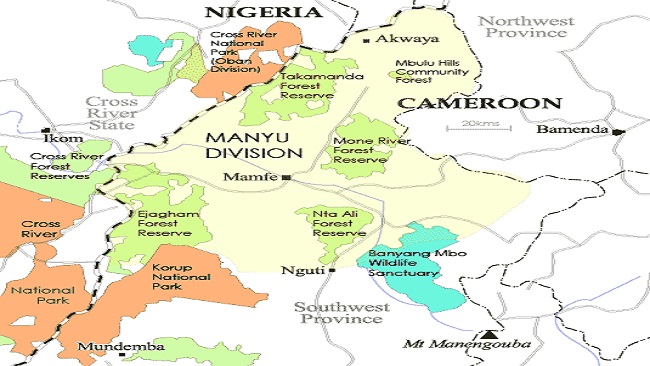
The two English-speaking regions – in the northwest and southwest of the country – constitute 20 percent of Cameroon’s over 24 million people. The Catholic Church is the largest religious group in the country, representing about 40 percent of all Cameroonians.
At the 43rd plenary meeting of the national episcopal conference, the bishops said the president in his capacity as “father of the nation” holds the keys to the speedy resolution of the crisis, and it is through “an inclusive dialogue” that the solution will come.
“If the head of state decides today that there will be a meeting with all those spear-heading the Anglophone crisis, there will be dialogue,” said Bishop Michael Bibi, the auxiliary bishop in the Archdiocese of Bamenda, which is located in the English-speaking part of the country.
“Those who are in prison can be granted clemency and freed. Those who are out of the country and who are engineering these problems can be called back home. Those who are back home but who are not in jail but are sympathetic to the Anglophone crisis should be invited to the discussion table…religious leaders, administrative authorities, the civil society, opinion leaders, Anglophone secessionist leaders…In fact the various stakeholders should be brought to the discussion table…let this dialogue take place so that together, we can find solutions to the crisis,” Bibi told Crux.
Noting that the search for peace had become a national emergency, Archbishop Jean Mbarga of Yaoundé told Crux the bishops had decided to organize “Novenas for Peace” in the days leading up to the celebration of Cameroon’s National Day, May 20.
But the deputy Secretary General of the National Episcopal Conference, Msgr. Jervis Kebei said that peace will only come if it is accompanied by justice.
“We all want peace, but there can be no peace without justice, there can be no peace without reconciliation,” Kebbei told Crux.
He said the government had taken a number of measures to resolve the crisis.
These include the creation of a National Commission for the Promotion of Bilingualism and Multi-culturalism; the creation of a Common Law Bench at the Supreme Court; the deployment of English-speaking lawyers and teachers to Anglophone schools and courts; and the appointment – for the first time since independence – of Anglophones to head the Ministries of Territorial Administration and Secondary Education.
But these measures are seen by many in the Anglophone regions as “too little, too late.”
“If all the measures taken by the government are not helping out the situation, if they are instead making young people to be more radicalized, it means that there is something more fundamental that the government has to do,” Kebei said.
The monsignor said only an inclusive dialogue can help Cameroon go “to the root cause of the problem,” noting that understanding the problem could provide important indications on how a solution can be found.
No talks with separatists, says government
Despite the plea of the bishops for an all-inclusive dialogue, the government has made it clear that there will be no discussion whatsoever with separatists.
Paul Atanga Nji, the first-ever Anglophone to head the Ministry of Territorial Administration, said on state media that “everything we do must be done within constitutional order.”
“Those who wish to operate outside that order can expect nothing else than to be dealt with firmly. We shall not entertain any language, we shall not entertain any action that either threatens territorial integrity of our nation or threatens life,” he said.
He said however that government was ready for dialogue “with those who seek the oneness of Cameroon.”
But the stance has been criticized by the bishops, since it would exclude those advocating independence for “Ambazonia,” what they call the Anglophone regions.
A surge in violence
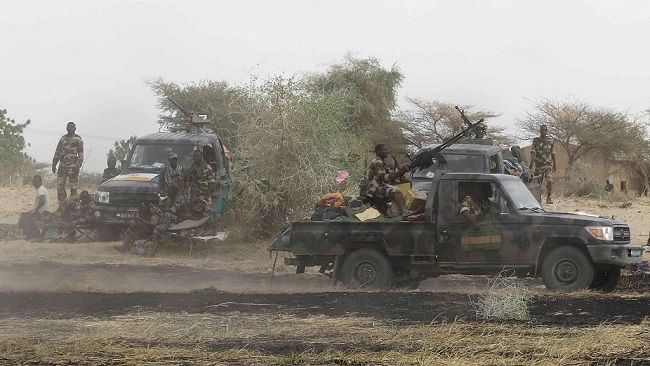
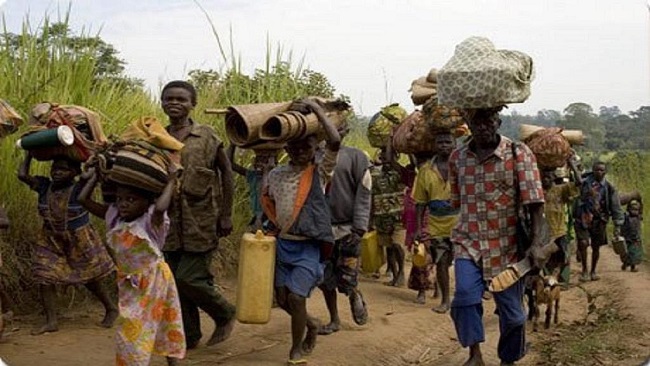
Meanwhile, the crisis has continued to escalate. Local media continue to file daily reports of fighting between security forces and “Ambazonian” fighters.
The bi-weekly newspaper The Voice reported that on April 11 a police commissioner was killed in the locality of Kom in Cameroon’s Northwest Region, allegedly by separatist forces. In response, the military killed 18 civilians.
Kebei told Crux that the bishops “strongly deplore the insecurity that is going on, perpetrated by people who are angry and – most often – by the military that goes reckless and on the rampage.”
“The military men are still being killed. In retaliation, the military kill the civilians and destroy property, and I think that it has reached a stage that the Head of State… (should) bring all together for an inclusive dialogue… and if a solution can not be reached then it means there is something fundamental that still needs to be done,” Kebei told Crux.
The monsignor said such dialogue must be accompanied by faith in God. He said the power of the Gospel can be employed to resolve the problem. “Christ’s message is the Word, and if this is applied to the existing situation, it will touch on people’s consciences.”
Source: Crux








22, April 2018
Pope Francis to new priests: Be like Jesus the Good Shepherd 0
On Sunday, Pope Francis ordained 16 men to the priesthood, reminding them to be like Jesus the Good Shepherd in the way they serve the members of their spiritual flock and minister to those who are lost and searching for God.
“Always have before your eyes the example of the Good Shepherd, who did not come to be served, but to serve and to seek and save what was lost,” the pope said in a homily before the ordination of 16 priests during a Mass in St. Peter’s Basilica April 22.
“Conscious of having been chosen among men and elected in their favor to attend to the things of God, exercise in gladness and sincere charity the priestly work of Christ,” he continued, “solely intent on pleasing God and not yourselves or human beings, [or] other interests.”
The priestly ordination coincided with “Good Shepherd Sunday” and the 55th World Day of Prayer for Vocations.
The new priests, who have been studying for the priesthood at different seminaries in the diocese of Rome, come from countries around the world, including Madagascar, Vietnam, Myanmar, Colombia, and El Salvador.
As in the past, for his homily Francis used the “ritual homily” from the Italian edition of the “Pontificale Romano,” the Catholic liturgical book containing rites performed by bishops, including the ordination of priests, adding a few of his own thoughts to the text.
Reflecting on the Sacrament of Penance in particular, Francis urged the men about to be ordained to “not get tired of being merciful. Think of your sins, your miseries that Jesus forgives. Be merciful.”
It is “through your ministry the spiritual sacrifice of the faithful is made perfect,” he noted, “because it is joined to the sacrifice of Christ, which for your hands, in the name of the whole Church, is offered bloodlessly on the altar in the celebration of the Holy Mysteries.”
He pointed out to the 16 men that in their priestly ministries they will be participants “in the mission of Christ, the only Master,” and advised them to read and meditate tirelessly on the Word of God “to teach what you have learned in faith, to live what you have taught.”
“[May] your teaching, joy and support to the faithful of Christ be the fragrance of your life,” he continued, “that with word and example you can build the House of God which is the Church.”
Following Mass, Pope Francis led pilgrims in St. Peter’s Square in praying the Regina Coeli, the traditional prayer for Easter.
Francis reflected briefly on the day’s Gospel, where Jesus says: “I am the good shepherd. The good shepherd gives his life for the sheep,” stating that the words of Jesus in this passage cannot be reduced to an emotional suggestion.
Noting that Jesus also says, “I am the good shepherd, I know my sheep and my sheep know me,” the pope said shows us that Jesus desires a personal relationship with each person, one which reflects “the same intimate relationship of love between Him and the Father.”
“He is attentive to each of us, knows our heart deeply: He knows our strengths and our faults, the projects we have achieved and the hopes that have been disappointed. But he accepts us as we are, he leads us with love,” he said, and in turn, “we are called to know Jesus.”
Culled from Crux