16, November 2019
Yaounde plans February polls under shadow of violence 0
Cameroon is poised to hold parliamentary and municipal elections in February but a bloody separatist conflict and political tensions are set to cloud the vote, experts say.
Anglophone separatists are fighting government troops in western Cameroon while the north of the country has come under attack from Boko Haram jihadists.
“These elections will not have optimum credibility,” Cameroonian academic Richard Makon told AFP, contending that in the present climate, “peaceful” polls were impossible.
“The security challenges in the Northwest and Southwest Regions are enormous,” he said, referring to a conflict between English-speaking separatists and security forces that have claimed more than 3,000 lives in two years.
The two regions with an anglophone colonial past are home to around 16 percent of the population of 25.8 million in the mainly francophone country.
In a remote region called the Far North, about a tenth of the population lives in deep poverty and at the mercy of Boko Haram.
Southern Cameroon long avoided such troubles, until men from the west recently launched ethnic attacks, wounding several people and setting businesses ablaze.
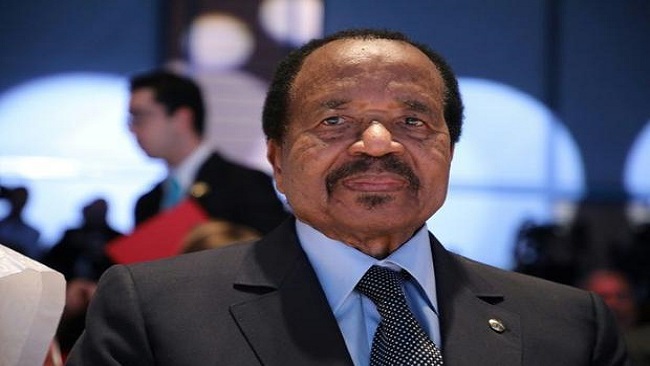
Despite the unrest, in a surprise move veteran President Paul Biya recently announced elections on February 9.
Members of parliament and town councils were last elected in 2013. Their five-year mandates ran out in 2018, but Biya has extended them twice.
The 86-year-old Biya has ruled the country for 37 years. He was returned to office in an election last year, which saw a significant drop in votes in the English-speaking regions.
– Plunging back into chaos? –
The 2018 presidential election triggered a major political crisis.
The runner-up, Maurice Kamto, immediately challenged the result and his Cameroon Renaissance Movement (CRM) held protests.
Arrested at one of the demonstrations, Kamto was jailed in January but released in October following foreign pressure.
The 65-year-old opposition leader has since been denied permission to organise rallies.
The MRC has for months insisted that holding elections should depend on a definitive return to peace in the anglophone regions.

Map of Cameroon locating English-speaking regions, AFP
Kamto’s party has not said if it will contest the poll, though individual CRM members have announced they will run for office.
“The risk is that Cameroon will plunge into the chaos of post-electoral confrontation,” Emmanuel Simh, the CRM’s third vice-president, said.
“It will enshrine the partition of the country — on one hand, we will have the francophone regions where the population will be able to vote, and on the other, the anglophone regions where it will be impossible to do so,” he warned.
– Special status –
Last month, Biya’s regime arranged what it called a “major national dialogue” to settle the anglophone crisis but the main separatist movements boycotted the forum.
One of the key recommendations of the talks was more autonomy for the English-speaking regions.

Biya has steered Cameroon for nearly four decadesLudovic MARIN, AFP/File
But the initiative must be adopted by parliament, which has yet to consider the proposal.
The election announcement was a surprise, given that the resolutions of the major national dialogue “have not even begun to be taken into account”, Makon said.
“It’s a little hard to envisage elections being held in the best conditions to produce legitimate winners who are accepted by the population,” he said.
Biya’s Cameroon People’s Democratic Movement (CPDM) is a colossus with 148 seats in the 180-member national assembly.
For all their doubts, opposition parties are caught between a rock and a hard place, Makon said.
“They must take part in the election because if they don’t, they will be shut out of political decisions for five years,” he said.
On the other hand, he argued, the ruling party “will no longer have a crushing majority… because of the ground taken by the MRC and the rise of (other) parties.”
He gave as an example the Cameroon Party for National Reconciliation (PCRN), led by Cabral Libii, a 39-year-old journalist who placed third in the 2018 presidential poll.
Source: Digital Journal















16, November 2019
IOC Chief in Nigeria and Cameroon-Inaugurates new ANOCA Headquarters 0
President Bach’s African tour continued with visits to Nigeria and Cameroon. It follows meeting in Cape Verde and Senegal earlier in the week.
The visit to Nigeria began in Abuja with a welcome dinner hosted by the Vice President of Nigeria, Yemi Osibanjo, who was representing the Nigerian President, who, for personal reasons, could not be present. Joined by Nigerian Olympians, President Bach was accompanied by the President of the Association of National Olympic Committees of Africa (ANOCA), Mustapha Berraf, and African IOC Members.
IOC/GREG MARTIN
The following day, President Bach and his delegation attended the inauguration of the new ANOCA headquarters. He was joined by ANOCA President Berraf as well as presidents and representatives of many of the 54 African National Olympic Committees (NOCs). President Bach told them: “a new home is always a chance to look to the future. Bringing all African NOCs together under one roof is a chance to take African sport to new heights.”
Earlier, the President visited Aduive school, which puts the Olympic values at the heart of its curriculum. After meeting the pupils and seeing sports demonstrations, the President unveiled Olympic rings at the school playing fields.
IOC/GREG MARTIN
Later, he had a Q&A session with Nigerian athletes, including Olympians and those hoping to qualify for the Olympic Games Tokyo 2020. The President answered a range of questions, from athlete numbers at the Olympic Games to the future of esports and egames. The athletes also thanked him for the reforms of Olympic Agenda 2020 and the progress being made by the IOC in gender equality.
In Cameroon, President Bach was welcomed by the new IOC Member in the country, Odette Assembe Engoulou, and by the NOC President, Hamad Kalkaba. Honorary IOC Member Issa Hayatou was also present.
The visit began with a dinner given by the Prime Minister of Cameroon, Joseph Ngute. The next day, President Bach was welcomed at the headquarters of the Cameroon NOC by hundreds of school children and many Cameroonian Olympians. He praised the role played by the NOC in bringing the country together, and wished the athletes luck for the Olympic Games Tokyo 2020.
IOC/GREG MARTIN
Later, President Bach met with the Prime Minister of Cameroon, and they discussed the excellent relations between the government and the NOC, and the government’s respect for the autonomy of sport.
The President was also able to drop in on the Cameroon International Badminton competition – an event that counts towards Olympic qualification – which was being held in the capital Yaoundé, where he spent time talking with athletes.
Before attending a farewell lunch hosted by the Cameroon Minister of Sport, President Bach was able to visit the African Centre for Olympic Studies to meet staff and see the work being done at the centre.
Source: Olympic.org