27, July 2022
Yaounde: Macron meets the despot who has been in power since when he was five years old 0
When the French president, Emmanuel Macron, landed in Yaoundé, Cameroon, on Monday for a two-day visit, France’s puppet leaders across Africa were assured of one thing: Françafrique is back. The question is what this means for the future of millions.
The answer – and Macron’s legacy – is more repression, more coups, more corruption, more violence, more suffering and, ultimately, more refugees and migrants making dangerous journeys to Europe in search of safety. It will also mean the further incursion of Russia and China, which highlight European colonial crimes even as they ramp up their own influence.
Born after the independence of France’s former colonies in Africa, Macron presents himself as the antithesis to Françafrique – the doctrine that dictates the terms of governance in former French colonies, by military force if necessary – or, as I see it, Colonisation 2.0.
Rather than abolish it, Macron reformed the colonial CFA franc – originally franc des colonies françaises d’Afrique – a currency still printed in France and used by 14 African countries. It will be renamed the Eco by 2027, sparking accusations of neo-colonisation, including by Italy’s then-deputy prime minister Luigi Di Maio.
To regain credibility, Macron agreed to return some of the African artefacts looted under colonialism in French museums, and to declassify secret files on the assassination in 1987 of Burkina Faso’s anti-colonial leader Thomas Sankara. He commissioned a report that criticised the former French president François Mitterrand over actions around the Rwandan genocide, agreed to return the skulls of 24 Algerian resistance fighters taken to France in the 19th century as trophies, and – as the diplomatic lead for all things related to French-speaking Africa at the UN security council – Macron also pledged to stand up for democracy and protect human rights.
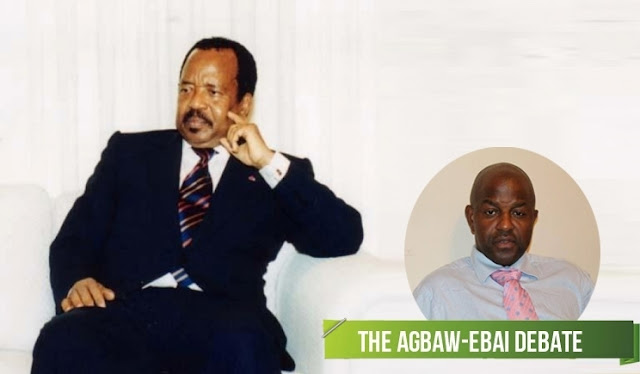
Yet Macron’s first foreign trip outside Europe since re-election in April will see him meet Paul Biya, an 89-year-old despot who has been in power since Macron was five years old.
Over the weekend the Élysée Palace said Macron was meeting Biya not to find a solution to Cameroon’s anglophone crisis, which has seen separatist militias and government forces committing human rights abuses with impunity for the past five years, but to discuss the food crisis caused by Russia’s invasion of Ukraine, agriculture and security issues.
Notably absent from the Élysée’s reasons for the visit are Biya’s human rights abuses, including the persecution of LGBT people.
No justification for Macron’s visit can erase the fact that Paris is still the bedrock for Françafrique and its puppets – such as Alassane Ouattara, in Ivory Coast; Ali Bongo Ondimba, in Gabon; Faure Gnassingbé, in Togo; Gen Mahamat Déby, in Chad; Denis Sassou Nguesso, in Congo-Brazzaville; as well as Biya – that France shelters under its security and diplomatic umbrella despite their gross abuses of human rights, corruption and electoral fraud that have impoverished their countries.
As violence in the Congo escalates, thousands are in effect being held hostage
Take Chad, where one in three – or 6.1 million people – need humanitarian assistance, according to the UN. When Idriss Déby, in power for 30 years, died from wounds sustained in combat last year, Macron said France had “lost a brave friend,” and endorsed his 37-year-old son, Mahamat, who dissolved the government and declared himself president, in violation of Chad’s constitution, before his father was even buried.
In Cameroon, the situation is dire. As Africa’s largest timber producer and the world’s fifth-largest cocoa producer, the country should be prosperous. Instead, Biya’s ruthlessly authoritarian regime has made it one of the world’s poorest, ranking 153 out of 189 countries in the 2020 Human Development Index. More than half of the 26 million population were “food insecure” long before soaring global commodity prices made it harder for families to put food on the table.
Add to this the codification of violence against women under Biya. According to Cameroon’s civil code, only men can be the heads of households, only men can choose the place of residence, and men and women do not have equal property rights.
In the penal code, adultery is always punishable if committed by a woman, but is only punishable when committed by a man if it is “habitual” or takes place in the matrimonial home. Abortion is criminalised, unless the mother’s life is in danger or if pregnancy is the result of rape – and rape is not a crime within marriage.
Macron, of course, knows all of this, but it seems what matters most is still Françafrique.
Culled from The Guardian


27, July 2022
Federal Republic of Ambazonia: Serving the Biya Francophone regime is treason 0
A senior Southern Cameroons official with the Ambazonia Interim Government has slammed as treasonous all West Cameroonians serving with the Biya Francophone regime in Yaoundé.
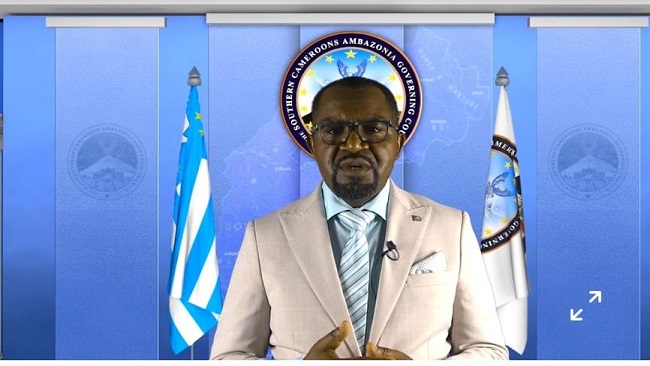
“Serving the interest of the French Cameroun regime is treason, and resistance and the use of weapons and the Big Rubbergun will continue until the liberation of the Ambazonian homeland,” Tabenyang Brado, Secretary of the Economy, said in a conversation with our US Bureau Chief Enowtaku Ebanghatabi Christelle
“The Federal Republic of Ambazonia will not fall in the face of French backed French Cameroun foreign threats and will remain a home for resistance,” Tabenyang Brado opined, adding that, “The Southern Cameroons struggle will not be torn apart and that the Federal Republic of Ambazonia will no longer be a French Cameroun colony.”
The Ambazonia front line official also stressed that five years into its formation, the Ambazonia Interim Government now led by Vice President Dabney Yerima has become much stronger and still challenges the Biya Francophone regime and its military apparatus deployed to Southern Cameroons.
Five years into a deadly separatist conflict in Cameroon’s English-speaking regions, hopes of finding a negotiated settlement seem more distant than ever as both the government and secessionist rebels dig in, according to civil society activists.
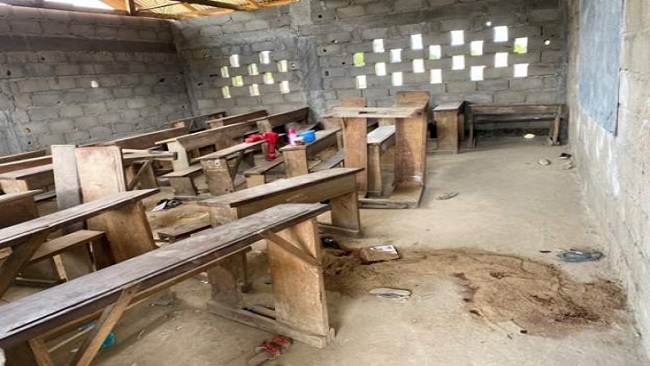
It’s a conflict marked by spikes of extreme violence that invariably target civilians. The latest high-profile incident was last month, when government soldiers killed nine people in Missong village, in the anglophone Northwest region.
Rights groups accuse both the security forces and secessionist fighters of serious abuses that include extrajudicial killings, rape, kidnapping, and torture.
The root of the conflict is the central government’s historical marginalisation of the two English-speaking regions, the Northwest and Southwest, home to about 20 percent of the population.
But the dynamics of the violence have changed with the growth of a lucrative “war economy”, typically involving kidnapping and the broader extortion of the civilian population. The political and economic spoils of the war have reduced the incentive to find a negotiated settlement.
By Isong Asu with files from Enowtaku Ebanghatabi Christelle and The New Humanitarian