29, August 2020
Southern Cameroons Crisis: Hard-hit Presbyterian church leads peace efforts 0
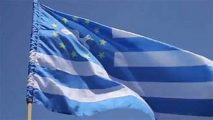
Cameroon’s 27 million people have two official languages – English and French – but the people in the two linguistic groups are divided, adding to the nation’s woes and those for its church leaders, along with another affliction, Boko Haram extremists.
Rev. Miki Hans Abia, synod clerk of the Presbyterian Church in Cameroon, lives in the southwestern part where most of the minority Anglophones live as the result of the country’s complex colonial history and explains his church’s role in the peace process.
“I believe that the Church in Cameroon is part of the solution to bring about peace and reconciliation to these conflicts,” he said. The church has more than 500 pastors serving 1.5 million Christians in the country.
Most Anglophones live in the southwest, and they are a significant minority in the country, where about 70 percent of the population are Christians, and some 24 percent are Muslims.
“It is no secret that the once-admirable nation of peace in the African continent is today experiencing the worst crisis or conflict situation in her history,” he says. “I won’t dwell on the Boko Haram incursions in the northern part of our country. I would rather focus on the Anglophone crisis because it affects our community and the church directly.”
One million displaced
Increasing violence and insecurity in Cameroon has forced more than one million people from their homes. Since 2014, Cameroon has also struggled to support refugees fleeing violence and civil war in neighbouring countries, according to the International Rescue Committee.
The scourge of 2020, COVID-19, and the related conflict in Africa’s Sahel region have dwarfed Cameroon’s Anglophone-Francophone conflict in people’s minds.
“It is now at the level of violent armed conflict between the English-speaking militia (Amba Boys) and the nation’s military and security forces. The devastation is enormous.
“There are hundreds of thousands of persons internally displaced. Thousands are refugees in neighbouring countries, many brutally murdered, many more living in sorrowful conditions in faraway bushes, kidnapping and requests for huge ransoms, wanton destruction of property and whole villages burnt down,” said Abia.
News outlets report on the government cracking down on protests and political opponents.
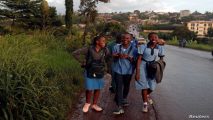
Njie Samuel Kale is the Presbyterian Church in Cameroon’s education secretary and said that the church has struggled to convince parents to send the children to school in some safe areas due to threats, acts of arson, kidnappings and killings.
“Some scholarships and materials were offered to needy kids as well as continuous support to internally displaced persons. Over 60 percent of our operations are grounded in terms of schools, health facilities and even churches.
“We continue to witness a growing number of displaced people,” said Kale.
Peace proposals
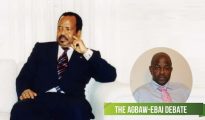
The Presbyterian Church in Cameroon has submitted a list of proposals to the national president, Paul Biya.
These call for the holding of an inclusive national dialogue, release of all those detained in connection with the unrest, a decentralized government system, and conservation of the Anglo-Saxon system of education that was “adulterated.” It also seeks a ceasefire, withdrawal of the military from the streets, and protection of the English judicial system of common law.
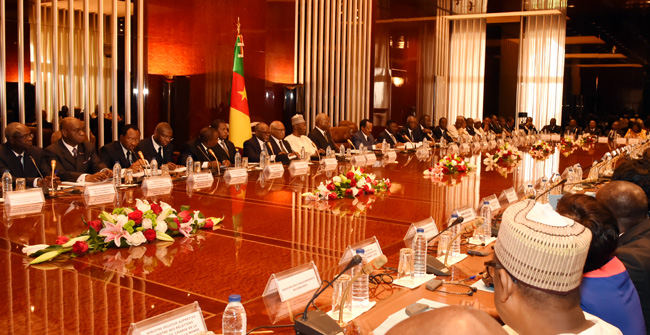
“The clergy and top laity also took part in several top meetings called by the government to bring peace and held audiences with ministers, the prime minister and the head of state,” said Kale.
From the latter part of the 19th century until World War I, Cameroon was a German colony. During that conflict, the British invaded from Nigeria, and the French took the bigger northern part under League of Nations mandates, the start of the current linguistic divide.
Reunification started in 1961
Created in 1961 by the unification of a British and a French colony, the modern state of Cameroon has also struggled to find peace and unity. The mainly-Muslim far north has been drawn into the regional Islamist insurgency of the Boko Haram group.
Abia said, “The Presbyterian Church in Cameroon, in communion with other churches and religious bodies, has played a very active role in an attempt to bring peace and reconciliation to conflicting parties and situations.”
He noted that the church is hard-hit in the country’s conflict because about 80 percent of its adherents, activities and economic ventures are found “in the war zone” and the church is predominantly English-speaking.
The Cameroon Presbyterians’ leadership has intervened and mediated in what he refers to as “the Anglophone crisis rocking the restive north-west and southwest regions of Cameroon.”
“The Presbyterian Church in Cameroon has organized, amongst others, interfaith services for all religious bodies in Cameroon. In some of such gatherings, her international partners were invited and actively took part in the peace discussions. Resolutions from such discussions aimed at peace and reconciliation were forwarded to the government of Cameroon,” explained Abia.
The church’s hierarchy championed by its head, the moderator, has regularly signed pastoral letters to its communion recommending “salient proposals” for the reinstitution of peace and tranquillity in war-torn areas in Cameroon.
“The church has been actively involved in peacebuilding initiatives from time immemorial and has continued to remain a cardinal point in preaching peace and reconciliation.”
Grand National Debate
For example, the church took part in actively organizing with the government a Grand National Debate (2019) to reinstate peace in Cameroon.
“Currently, the Presbyterian Church in Cameroon is a major player in the government-led Reconstruction Plan; advising that peace and reconciliation are prerequisites for reconstruction, that the minds of all parties and stakeholders must be reconstructed first before material things,” said Abia.
The church works with its foreign partners to help counsel the Cameroon government and other conflicting parties.
For example, in March 2020, the moderator of the Presbyterian Church in Cameroon led an international delegation for a meeting with the prime minister of Cameron to brainstorm on concrete measures to resolve the crisis in Cameroon.
“The prophetic voice of the church through her pastors and other preachers of peace have been of great importance to de-escalate the conflict in the two Anglophone regions,” said Abia.
The church has a committed group called the Peace Office that engages in peace workshops with a variety of funding partners.
“I believe that the church in Cameroon is part of the solution to bring about peace and reconciliation,” said Abia.
Culled from World Council of Churches









29, August 2020
Yaounde: Captain Stephen Tataw going home to rest 0
Stephen Eta Tataw 57, the renowned Southern Cameroons footballer who captained the Indomitable Lions of Cameroon will be buried today Saturday, August 29, 2020, at 1 p.m. at the Catholic cemetery at Mvolyé, located in the 3rd district of the French Cameroun capital, Yaoundé.
The late captain of the 1990 Cameroon team will be accorded final tributes during a ceremony scheduled at the Yaounde Sports Palace, under the chairmanship of the Minister of Sports and Physical Education, Narcisse Mouelle Kombi and a so-called personal representative of the Head of State.
In addition to the Requiem Mass, the late Javion as he was popularly known will receive a posthumous decoration after testimonies from his family, former teammates, FECAFOOT and the Biya regime.
Yesterday’s ceremony at the Yaounde Central Hospital was very popular, despite measures to limit gatherings because of the COVID-19 pandemic. Several generations of the Indomitable Lions, including Samuel Eto’o and Roger Milla answered present. French Cameroun political and sports authorities also took part notably the Minister of Sports, Mr. Mouelle Kombi and Seidou Mbombo Njoya, the President of FECAFOOT.
Winner of the 1988 African Cup of Nations in Morocco, the man with 43 caps went down in history as captain of the mythical team that reached the quarter-finals of the 1990 World Cup.
By Rita Akana in Yaounde