27, January 2022
New evidence reveals how British soldiers help Biya keep control and train his forces accused of executing children and burning buildings 0
British diplomats believe Cameroon, a country with 27 million inhabitants, is run by just five men and that there is “extensive corruption”.
At the top is President Biya, who has ruled the Central African state with an iron fist for nearly 40 years. Now in his late 80s, he governs mostly from a luxury hotel in Switzerland.
But Britain supports his regime and conducted six secret counter-terrorism operations in Cameroon last year, it can be revealed.
They have code names like Cylix, Bacchus and Abbadide.
Most of the operations involved training and “capacity building” for troops tackling the Boko Haram and Islamic State groups.
This included UK activity at a barracks in Cameroon’s far north, Salak, where Amnesty International says terrorism suspects were tortured.
Britain is building training villages in Salak for elite Cameroon units, documents obtained by Declassified show.
Those forces are also accused of severe human rights abuses against an English-speaking “Ambazonian” movement.
In response to fresh demands for autonomy from the Francophone central government in 2017, Amnesty says more than 20 peaceful protesters were shot and over 500 arbitrarily detained.

Our revelations of British support for Biya’s regime come as Amnesty launched a campaign on Monday to free political prisoners in Cameroon.
Fabien Offner, a researcher for the group, said: “Over the past five years, the human rights situation has grown increasingly bleak as people from Anglophone regions, including journalists, human rights defenders, activists and supporters of political opposition, have been arrested and jailed for expressing their opinions or peacefully protesting.”
The UK government is aware of such abuses. British officials have privately noted President Biya’s “frequent detention of opposition activists and unjustifiably broad use of the anti-terrorism law”.
But Whitehall is offering considerable support to Biya’s regime. One recent UK operation, codenamed ODYSSEAN, saw a British special forces officer draft a “crisis management” doctrine for Cameroon’s president.
In return for this and other services, Biya awarded the officer — lieutenant colonel “Sid” Purser — the equivalent of an MBE.
Alongside the military support, Britain signed a £200-million trade deal with Cameroon last year. A British foreign minister met President Biya in March 2021 to discuss “investment opportunities”, which include a Guinness factory.
Ngoh Ngoh and Eko Eko
Lt Col Purser — a Falklands war veteran and marine commando — is stationed in Cameroon as Britain’s “senior military adviser”.
There, he has cultivated “influential relationships” with Biya’s “right-hand man”, Ferdinand Ngoh Ngoh, and Cameroon’s spy chief Leopold Maxine Eko Eko. Cameroon’s prime minister and defence minister appear to be the other most influential people.
Ngoh Ngoh came to Britain in May 2018 to visit the UK intelligence community.
Eko Eko runs the country’s fearsome intelligence agency, the Directorate General Research External (DGRE). British diplomats described him as a “dove” and said his spies “previously had a bad compliance reputation” until he took over in 2010.
However, Amnesty International has published allegations of torture throughout Eko Eko’s leadership of the DGRE. Former detainees say senior DGRE officers got away with torture from 2013-17.
Despite Amnesty’s detailed report, UK defence minister James Heappey met Eko Eko at a dinner hosted by the British ambassador while visiting Cameroon last spring. The British minister was briefed to “reinforce the view that protecting the civilian population is paramount”.
He was also advised to “praise” Eko Eko for his counter-extremism efforts and “thank” him for letting British troops conduct “capacity building” of the DGRE at Salak, which is “close to the area of operations”. The spy chief deployed 32 of his men at the notorious torture site to coincide with the UK training.
Ministerial visit
Ministry of Defence (MOD) briefing papers for Heappey’s visit have been obtained by Declassified. They expose the scale of Britain’s covert military role in the African police-state — where France is traditionally seen as the more dominant European power.
The documents show how British diplomats overlook Biya’s “shortcomings on human rights and democracy”, partly because he voted with the UK to condemn the use of chemical weapons by Russia and Syria.
The UK saw Cameroon as a “priority lobbying country” at the Organisation for the Prohibition of Chemical Weapons.
“President Biya is instinctively a supporter of the rules-based international order,” the then UK High Commissioner Rowan Laxton insisted.
A few months later, more than 500 activists from the opposition party, the Movement for the Renaissance of Cameroon, were reportedly rounded up.
The crackdown earned Biya criticism from 14 UN human rights experts, who were “extremely worried about mass arrests of peaceful protesters and political activists who express dissent”. More than 100 activists from this group remain in detention, Amnesty said on Monday.
Rapid Intervention Battalion
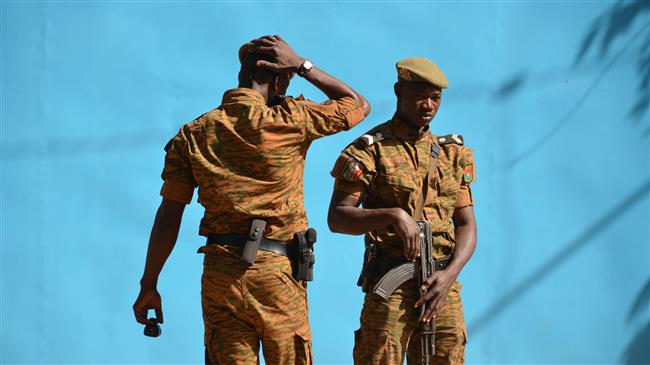
As well as supporting Cameroon’s intelligence agency, Britain works with the regime’s special forces. “The main focus of UK capacity building in Cameroon” is on the Bataillon d’Intervention Rapide (BIR), or Rapid Intervention Battalion, the documents show.
This is a well-armed elite force of 10,000 men. They are accused of torture, executing women and children and burning down a village. French, US and Israeli support for the BIR is well known, whereas Britain’s role has remained largely hidden.
Minister Heappey was photographed on Twitter with the BIR during his visit to Cameroon last year. The MOD’s tweet said British troops were “working alongside Cameroon’s BIR force to counter the twin threats of Islamic State and Boko Haram in the Lake Chad Basin”.
His briefing notes reveal much more about the extent of this deployment. They show Heappey met Colonel Ndongo, the BIR Commander of what the Biya regime calls Operation Alpha — its mission against Boko Haram.
Heappey was told to congratulate the colonel on his “successful” work against the terror group and ask what more the UK could do. The British minister then observed UK troops providing capacity building in Salak, where detainees have allegedly been tortured.
A British army short-term training team was deployed to Salak from January 2021. There they conducted “train and advise activity with BIR and DGRE” until around mid-April 2021.
By that stage, Whitehall was considering “whether the capacity building should evolve to include assist, enable or accompany functions”. It is not clear if this development went ahead.
A UK Brigadier General who visited Cameroon during the deployment “noted the professionalism” of the BIR and DGRE but worried their successes were “generally short-lived”.
Britain’s former ambassador believed Cameroon security forces “have performed admirably”.

Carriage of weapons
UK interest in Cameroon grew after neighbouring Nigeria snubbed some MOD offers to help counter Boko Haram. The militant group has kidnapped school girls and terrorises the Lake Chad region.
France asked the UK to “do more” to counter the Islamic extremist group in 2016. The then prime minister Theresa May agreed.
Purser’s military post in Cameroon was established and he focused “on delivering effect in North East Nigeria from the ‘outside-in’ ”.
He had spent the previous five years leading counter-terrorism efforts by UK special forces across north west Africa.
His more recent work in Cameroon has relied on troops from 1 Scots Specialised Infantry Group.
These soldiers are now part of the army’s special operations brigade, a new “ranger battalion” that is expected to fight alongside allies in counter-insurgency situations.
This concept has already been trialled in Cameroon, where an “exchange of notes… provides for UK jurisdiction and carriage of weapons in the far north”.
It also sets out Britain’s human rights concerns and “what our response would be to any infraction”. The files say “this is closely monitored”.
The risk is so high that UK training “has been designed to be delivered directly to force elements that are already deployed or will deploy shortly” on operations to counter Boko Haram or Islamic State in northern Cameroon.
This is “intended to minimise the risk of UK trained units being diverted to other theatres”, a reference to parts of the country where English-speakers are struggling for independence.
Training includes “mountain manoeuvres” and “targeted use of intelligence (to reduce collateral damage)”. The MOD claims the training has made Cameroon’s state security forces “highly effective”. The Red Cross provides sessions on the law of war as part of the training.
Private security companies
Air support for ground troops appears to be an issue. All three of Cameroon’s C130 military transport planes were grounded in March 2021.
Marshall Aerospace, a British firm, signed a contract in 2019 to maintain the aircraft but it is awaiting payment from Cameroon’s state oil company.
Heappey was instructed to ask Biya’s right-hand man, Ngoh Ngoh, to “unlock the bureaucracy” and let the payment go through.
Another British business, the Westminster-based Torchlight Group, has provided intelligence analyst training to “all force elements engaged in the far north” of Cameroon.
It helped “provide interoperability between all agencies” such as DGRE and the BIR over the last three years. Torchlight did not respond to a request for comment.
Ambazonia
The papers provide a rare insight into the Foreign Office’s view of the Ambazonia conflict. The region was once a British colony called the Southern Cameroons. During independence negotiations in 1961, local people voted to join the larger, French-speaking part of Cameroon.
A federal system that was meant to preserve some autonomy gradually broke down, and this marginalisation fuelled Ambazonian separatist sentiment.
The documents show British diplomats noting that “widespread human rights abuses continue to occur at the hands of both separatists and state security forces” in Ambazonia.
Whitehall believes: “There is no chance of — and little popular support for — independence… But the conflict will continue to simmer unless and until the Government addresses the reasonable demands of the moderate majority.”
These “moderate” demands are seen as greater autonomy, financial support, protection of civilians and respect for the use of English.
UK officials think President Biya had “a long period of denial” on the Anglophone crisis and that his defence minister, Joseph Beti Assomo, believes it can be “ended through military action alone”.
At Heappey’s meeting with Ngoh Ngoh, who is also Biya’s likely successor, he was told to point out: “There still appears to be too many allegations relating to the Anglophone crisis, notwithstanding the possibility of disinformation [fake news], all credible allegations must be investigated.”
An initial “dialogue plan” for the crisis was “developed in coordination with Sir Jeffrey Donaldson”, a right-wing MP in Northern Ireland.
Donaldson walked out on the Good Friday Agreement peace talks but has styled himself as an international conflict negotiation expert. He is now UK trade envoy to Cameroon.
Heappey was advised to tell Cameroon’s spy chief, Eko Eko, that “military operations must be intelligence-led and precise and that dialogue is essential to achieving a peaceful solution to the conflict”.
He was to “highlight our own examples/lessons from Northern Ireland where the UK did not always get it right”, such as internment — the mass detention of terrorist suspects without trial.
An MOD spokesperson told Declassified: “The UK is committed to working with regional allies in Central and West Africa to tackle violence in the Lake Chad Basin.
“Cameroon is an important partner in this effort and we are exploring what further support we can provide to tackle shared security challenges and further contain the spread of violent extremism in the region.”
The Cameroonian authorities did not respond to a request for comment.
Culled from Daily Maverick


27, January 2022
Olembe Stadium Crush: CAF President Motsepe blames closed gate for tragedy 0
African football supremo Patrice Motsepe says an “inexplicable” decision to keep an entry gate closed was responsible for the deadly crush which killed eight people before an Africa Cup of Nations match in Cameroonian capital Yaounde on Monday.
“That gate was supposed to be open because if it was open they would have walked through, and for inexplicable reasons it was closed,” the Confederation of African Football (CAF) president said at a press conference on Tuesday.
“If that gate was open as it was supposed to, we wouldn’t have had this problem we have now, this loss of life. Who closed that gate? Who is responsible for that gate?”
A child was among the dead, while 38 were injured as fans attempted to enter the Olembe Stadium where the hosts Cameroon were playing the Comoros, according to figures released by the country’s health ministry.
A baby was reportedly one of those trampled by the crowd and was in a “medically stable” condition, the health ministry added.
Communications Minister Rene Emmanuel Sadi said that of those injured, seven were seriously hurt.
Motsepe called for a probe after Cameroon’s President Paul Biya earlier ordered an investigation “so that all light is shed on this tragic incident,” according to Sadi.
‘Complete chaos’
The tragedy happened at gates where final ticket checks are supposed to take place.
“It was when the police opened the gates that people fell and others trampled on top of them,” said Professor Andre Omgbwa Eballe, director of the Olembe district hospital who attended the match.
“I saw the bravery of the Cameroonian people. People were resuscitating others, doing mouth to mouth, otherwise there would have been more deaths,” he told AFP TV.
One man in his 30s who was caught in the crush told AFP that it was “complete chaos” at the entrance to the stadium as supporters without tickets tried to force their way in.
“I arrived a quarter of an hour before kick-off. I had my ticket, but all of a sudden a group of people without tickets arrived and tried to force their way through and we found ourselves pushed up against the fences,” said the supporter, who gave his name as Stephane.
“I was crushed up against a woman who said she couldn’t breathe. Eventually the gate gave in and I was able to get through, but it was complete chaos.”
In a statement released by the Cameroonian Football Federation, captain Vincent Aboubakar called on fans “to be highly disciplined and responsible” and “for the preservation of security, brotherhood and shared happiness in the stadiums.”
Quarter-final match moved
Motsepe said the Cup of Nations quarter-final due to be played at the Olembe Stadium on Sunday will be switched to the Ahmadou Ahidjo stadium, also in Yaounde.
He added that CAF had not considered cancelling the rest of the tournament but had contemplated the idea of postponing Tuesday’s last-16 ties.
Instead Senegal beat Cape Verde in Bafoussam and Morocco defeated Malawi in matches preceded by a moment’s silence.
Players of all teams wore black armbands while advertising boards around the pitch at the Ahmadou Ahidjo stadium, where Morocco played Malawi, displayed the message: “Condolences to families of departed spectators”.
Crowds at the 60,000-seat Olembe Stadium — and at all venues — had been limited to 60 percent of capacity for the tournament because of the pandemic, but the cap is raised to 80 percent when Cameroon’s Indomitable Lions play.
Liverpool’s Mohamed Salah, who is with Egypt preparing for their quarter-final against the Ivory Coast in Douala on Wednesday, said his team’s thoughts were with the victims.
“We are sorry about what happened yesterday, and hopefully the injured people will come back home safe,” Salah said.
Cameroon was initially meant to host the Cup of Nations in 2019, but the event was moved to Egypt over concerns the country’s stadiums were not ready and question marks over security.
Overcrowding at football matches around the world has resulted in scores of deaths.
Thousands of fans in the Egyptian capital Cairo in 2015 attempted to enter a stadium to watch a game, triggering panic as police fired tear gas and birdshot, resulting in 19 dead.
In April 2001, 43 people died in a stampede at Johannesburg’s Ellis Park during a game between Orlando Pirates and Kaizer Chiefs.
In chaotic scenes at last year’s European Championship final between England and Italy in London, some 2 000 ticketless fans gained access to Wembley, with an independent review finding a tragedy was only narrowly averted.
Source: Agence France-Presse