Cameroon Concord News
You Are What You Read
  • Home
  • News
    • Cameroon
    • Nigeria
    • Africa
    • Europe
    • World
  • Politics
    • Cameroon
    • Nigeria
    • Africa
    • Europe
    • World
  • Sports
    • Cameroon
    • Africa
    • Europe
    • World
  • Business
    • Africa
    • World
  • Life
    • Education
    • Health
    • Fashion
    • Entertainment
  • Religion
    • Cameroon
    • World
  • Contact
    • Online
    • Phone
    • Email
  • About
    • Us
    • Our Services
    • Advertising with Us

Categories

Recent Posts

  • Kremlin says US mediation role in Russia-Ukraine negotiations on hold
  • Football: Bayern Munich eye €50m move for Yann Bisseck
  • Southern Cameroons Crisis: Suspected Ambazonia fighters kill two students in Bambui
  • Biya is already in Hell as Yaoundé unravels
  • Child Benefit: Biya regime audit families after 55% jump in declared children

Archives

  • June 2026
  • May 2026
  • April 2026
  • March 2026
  • February 2026
  • January 2026
  • December 2025
  • November 2025
  • October 2025
  • September 2025
  • August 2025
  • July 2025
  • June 2025
  • May 2025
  • April 2025
  • March 2025
  • February 2025
  • January 2025
  • December 2024
  • November 2024
  • October 2024
  • September 2024
  • August 2024
  • July 2024
  • June 2024
  • May 2024
  • April 2024
  • March 2024
  • February 2024
  • January 2024
  • December 2023
  • November 2023
  • October 2023
  • September 2023
  • August 2023
  • July 2023
  • June 2023
  • May 2023
  • April 2023
  • March 2023
  • February 2023
  • January 2023
  • December 2022
  • November 2022
  • October 2022
  • September 2022
  • August 2022
  • July 2022
  • June 2022
  • May 2022
  • April 2022
  • March 2022
  • February 2022
  • January 2022
  • December 2021
  • November 2021
  • October 2021
  • September 2021
  • August 2021
  • July 2021
  • June 2021
  • May 2021
  • April 2021
  • March 2021
  • February 2021
  • January 2021
  • December 2020
  • November 2020
  • October 2020
  • September 2020
  • August 2020
  • July 2020
  • June 2020
  • May 2020
  • April 2020
  • March 2020
  • February 2020
  • January 2020
  • December 2019
  • November 2019
  • October 2019
  • September 2019
  • August 2019
  • July 2019
  • June 2019
  • May 2019
  • April 2019
  • March 2019
  • February 2019
  • January 2019
  • December 2018
  • November 2018
  • October 2018
  • September 2018
  • August 2018
  • July 2018
  • June 2018
  • May 2018
  • April 2018
  • March 2018
  • February 2018
  • January 2018
  • December 2017
  • November 2017
  • October 2017
  • September 2017
  • August 2017
  • July 2017
  • June 2017
  • May 2017
  • April 2017
  • March 2017
  • February 2017
  • January 2017
  • December 2016
  • November 2016
  • October 2016
  • September 2016
  • August 2016
  • July 2016
  • June 2016
Chinese Football: Stephane M’bia re-joins Wuhan FC

9, April 2021

Chinese Football: Stephane M’bia re-joins Wuhan FC 0

Former Cameroon captain Stephane M’Bia has moved back to Chinese Super League club Wuhan FC after a one-year spell with Shanghai Shenhua.

“Welcome Mr. M’Bia back to the Wuhan Zall family, and we look forward to his finding back the feeling of playing with the familiar faces in the team,” Wuhan FC said in a statement on Wednesday.

The 34-year-old defender joined the Wuhan outfit from Toulouse FC in February of 2019.

He then joined Shanghai Shenhua the following year.

The 2021 campaign of the Chinese Super League will start on April 20.

Source: Xinhuanet

US arrests two Cameroon women traveling on fake passports

9, April 2021

US arrests two Cameroon women traveling on fake passports 0

U.S. Customs and Border Protection (CBP) officers identified two Cameroon women as impostors at Washington Dulles International Airport on Monday with the help of biometric facial comparison technology.

The two women arrived at a CBP primary inspection booth separately after their flight arrived from Brussels, Belgium on Monday afternoon and each presented a U.S. passport to a CBP officer. CBP’s biometric facial comparison technology reported a mismatch between each woman and the true bearers of the U.S. passports.

The CBP primary inspection officer referred both women to a secondary examination. During separate interviews, both women immediately admitted that they purchased the U.S. passports. CBP determined the women to be impostors for deliberately attempting to use genuine travel documents that were lawfully issued to other people.

CBP is not releasing the women’s names because neither woman was criminally charged. Instead, CBP seized the passports and ordered the women to be expeditiously removed from the United States.

CBP uses biometric facial comparison technology to further secure and enhance the international arrivals process while protecting the privacy of all travelers. When travelers arrive from overseas, they pause for a photo at the primary inspection point. That photograph is then compared to the traveler’s passport or visa photo retrieved from government holdings.

Since September 2018, CBP has leveraged facial biometrics to prevent more than 500 imposters from illegally entering the United States.

“This is a great example of how Customs and Border Protection officers use their law enforcement experience coupled with biometric facial comparison technology to intercept impostors deliberately masquerading as lawful travelers,” said Keith Fleming, Acting Director of Field Operations for CBP’s Baltimore Field Office. “Impostors violate U.S. immigration law and may pose a serious threat to our national security.”

Source: Cbp.gov
Queen Elizabeth II’s husband Prince Philip dead age 99

9, April 2021

Queen Elizabeth II’s husband Prince Philip dead age 99 0

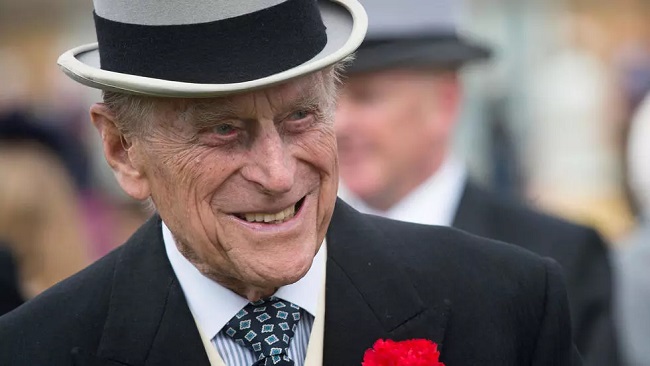
Britain’s Prince Philip, a constant presence at Queen Elizabeth II’s side for decades, died Friday at age 99, Buckingham Palace announced.

The death of the Duke of Edinburgh is a profound loss for the 94-year-old monarch, who once described him as her “strength and stay all these years”.

The outspoken former navy commander devoted much of his life as the queen’s consort to charity work — but was notorious for numerous gaffes, many deemed downright offensive.

He was admitted to hospital on February 16, 2021, and went home after a month during which he was treated for a pre-existing heart condition and an infection.

Announcing his passing, BBC television played the national anthem over a picture of Philip in his prime, dressed in military dress uniform

Philip, who was by the queen’s side for nearly eight decades, retired from public duties in 2017 at the age of 96.

His death came just months before his 100th birthday in June — an event typically marked in Britain with a congratulatory message from the queen, who is now Britain’s longest-serving monarch.

The couple, who celebrated their 73rd wedding anniversary in November, had been living largely in isolation at Windsor Castle, west of London, because their advanced age put them at heightened risk from Covid-19.

Philip and the queen received their first vaccinations against the virus in January.

– Few public appearances –

Philip was no stranger to health issues.

He was previously fitted with a stent in 2011 after suffering from a blocked artery.

He also had a hip operation in 2018 and in January 2019, he emerged unscathed after his vehicle was involved in a traffic accident that injured two people near the monarch’s Sandringham estate in eastern England.

The prince then spent four nights in hospital in December that year, receiving treatment for what was described as a “pre-existing condition”.

He was discharged on Christmas Eve, in time to rejoin the rest of the royal family for the festive period.

Since the pandemic, Philip has made few public appearances.

He was last seen at a staged appearance at a military ceremony at Windsor Castle in July, days after attending the wedding ceremony of his granddaughter Princess Beatrice.

In November, he and the queen marked the latest anniversary of their 1947 nuptials by releasing a photograph of them together, again at Windsor.

Philip and the queen have four children — Charles, Anne, Andrew and Edward — eight grandchildren and nine great-grandchildren.

– Shelved personal ambitions –

Philip, the longest-serving consort in British history, was born on the island of Corfu with Danish and Greek royal titles.

He fled the country when he was just 18 months old with his parents and four sisters, after his uncle, king Constantine of Greece, was forced to abdicate.

The family initially settled in France.

Philip was formally introduced to princess Elizabeth, the future queen, in July 1939 and they kept in touch during the war, meeting on a number of occasions.

The pair married in Westminster Abbey in London in 1947.

A rising star in the British navy, Philip had reached the rank of commander by the time Elizabeth ascended to the throne in 1952. He eventually shelved his personal ambitions to support his wife in the role.

Over the ensuing decades he was involved in numerous charities, including the World Wildlife Fund For Nature and the Duke of Edinburgh Award scheme for young people.

Source: AFP

Seven priests ordained for Mamfe’s Catholic Diocese

9, April 2021

Seven priests ordained for Mamfe’s Catholic Diocese 0

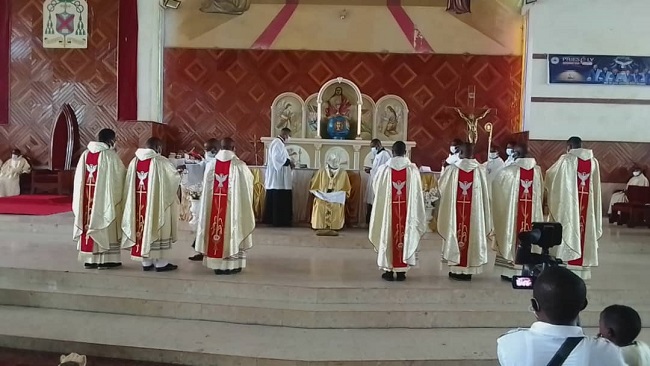
Archbishop Andrew Nkea ordained seven new priests for the diocese of Mamfe this morning. This is the first ordination by a metropolitan Archbishop in the entire South West Region.

Cameroon Concord News correspondent in Mamfe, the chief town in Manyu reported that the areas of ministry entrusted to the new priests fall under three general headings, Altar, Word and Charity.

The new clerics will work in parish teams in the diocese of Mamfe. They will join deacons and lay parish pastoral workers in parishes.

“Today is a great day for the Diocese of Mamfe,” said Dr Andrew Nkea.

“It is a great day for this lively diocese, which sees seven of its sons called to the priesthood. This is a great day for the Presbyterium of Mamfe.”

The seven priests ordained are: Paul Ajong, John Etta, Carole Thcinda, Patrick Tabot, Niver Lengue, Peter Atem and Alfred Vetam.

In his homily, Archbishop Andrew Nkea said the priesthood is a gift from God through the bishop.

The hands of the priests will be laid on the candidates but the gesture will be meaningful if and only if those hands are united with the hands of the bishop who is the principal celebrant at every ordination ceremony.

This collaboration with the bishop is depicted at every ordination ceremony when the candidates on making the promise of obedience to the bishop. In the rite, it is only at the moment of the promise of obedience that the candidate kneels before the bishop surrenders his hands between those of the bishop who questions his obedience to him and his legitimate successor.

Such is a spiritual connection based on respect and obedience. Respect and obedience are priestly virtues which enables the bishop to do his duty in overseeing the afford of the diocese whereas obedience enables the priest to collaborate with the bishop in the same ministry.

Between the bishop and his priests, there exists a communio sacramentalis as quoted from Pastres Gregis.

Bishops ordain priests out of love and nothing else. It would therefore be a contradiction in terms for a priest to say his bishop does not love him. Every priest must be ready to see the love of God in his bishop. At no point should a priest think he is better than his bishop irrespective of the talents they display. Illustrating from the Gospel text, the Prelate identifies the strict obedience of the disciples who put out their nets without questioning.

Many young priests get into the priesthood with their own ambitions and if they don’t get them they threaten to leave the priesthood. A bishop can never satisfy all his priests.

Each diocesan Priest has as one of his duties the spiritual care of the presbyterate.

By Soter Tarh Agbaw-Ebai with files from Rev Father Eboka

Northern Ireland: Riots flare again despite calls for calm

9, April 2021

Northern Ireland: Riots flare again despite calls for calm 0

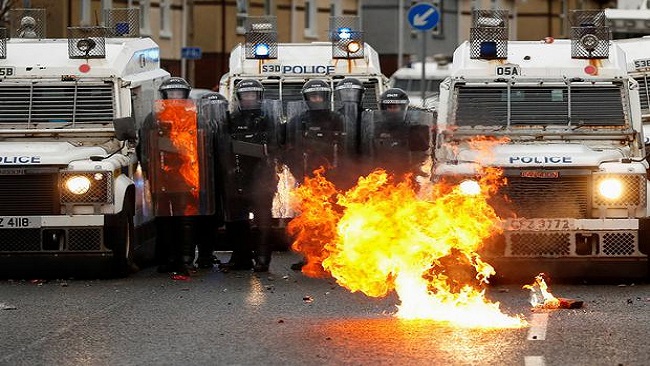
Northern Ireland police faced a barrage of petrol bombs and rocks on Thursday, an AFP journalist said, as violence once again flared in Belfast despite pleas for calm.

Riot police on the republican side of the divided city were pelted with projectiles as they tried to prevent a crowd moving towards pro-UK unionists.

British Prime Minister Boris Johnson and Irish counterpart Micheal Martin had earlier called for “calm” following days of violence that included a petrol-bomb attack on a moving bus.

Martin and Johnson held telephone talks in which they stressed that “violence is unacceptable” and “called for calm”, the Irish leader’s office said.

But their calls went unheeded as night fell in Belfast, with unrest breaking out on the republican side of the capital.

Rioting over the last few days—the city’s worst unrest in recent years—had mainly stemmed from its unionist community, leading to joint condemnation from political leaders in the British province.

Unionists are angry over apparent economic dislocation due to Brexit and existing tensions with pro-Irish nationalist communities.

“Destruction, violence and the threat of violence are completely unacceptable and unjustifiable, no matter what concerns may exist in communities,” said the Northern Ireland executive—made up of unionist, nationalist and centrist parties.

“While our political positions are very different on many issues, we are all united in our support for law and order.”

Northern Ireland Secretary Brandon Lewis visited Belfast to meet leaders from the main parties, including unionist First Minister Arlene Foster and deputy First Minister Michelle O’Neill of Sinn Fein, as well as faith and community advocates.

He called the joint condemnation “a very clear statement”, adding “there is no excuse for violence, we’ve got to make sure we take things forward in a proper democratic and political way.”

In Washington, the White House also expressed concern over the violence and urged calm.

‘Sectarian violence’

In the disorder on Wednesday, gates were set alight on a “peace line”—walls separating pro-Irish nationalist and unionist communities—and police said crowds from either side broke through to attack each other with petrol bombs, missiles and fireworks.

Police Service of Northern Ireland (PSNI) temporary assistant chief constable Jonathan Roberts said the scale and nature of the violence was unprecedented in recent years.

“The fact that it was sectarian violence and there was large groups on both sides… again is not something we have seen for a number of years,” he told reporters.

Before Thursday, six nights of unrest left 55 police injured, Roberts noted, as well as a press photographer and the driver of the bus fire-bombed Wednesday.

He said children as young as 13 were suspected of involvement following encouragement from adults, and the large volume of petrol bombs used suggested “a level of pre-planning”.

The PSNI is probing if Northern Ireland’s notorious paramilitary groups were involved in the unrest.

‘Deep rooted’

Northern Ireland endured 30 years of sectarian conflict that killed 3,500 people.

Unionist paramilitaries, British security forces and armed nationalists seeking to unite the territory with the Republic of Ireland waged battle until a landmark peace deal in 1998.

The accord let unionists and nationalists coexist by blurring the status of the region, dissolving border checks with fellow European Union member Ireland.

But Britain’s 2016 vote to quit the EU revived the need for border checks. A special “protocol” was agreed that shifted the controls away from the land border to ports trading with the UK mainland, prompting many unionists to accuse London of betrayal.

There was also recent outrage among unionists after Northern Irish authorities decided not to prosecute Sinn Fein leaders for attending a large funeral last year of a former paramilitary leader, in apparent breach of Covid restrictions.

Few people in central Belfast on Thursday wanted to discuss the sensitive situation.

“It’s deep-rooted, it’s not just about Brexit,” said Fiona McMahon, 56, before adding Britain’s EU withdrawal had had a “massive impact”.

“The British do whatever the hell they want to do and we get landed with everything afterwards,” she told AFP.

PM Johnson tweeted overnight that he was “deeply concerned”, saying “the way to resolve differences is through dialogue, not violence or criminality”.

Johnson and Martin agreed during their call that “the way forward is through dialogue and working the institutions of the Good Friday Agreement,” according to Dublin.

Source: AFP

Djibouti: 73-year-old President Guelleh seeking a fifth term

9, April 2021

Djibouti: 73-year-old President Guelleh seeking a fifth term 0

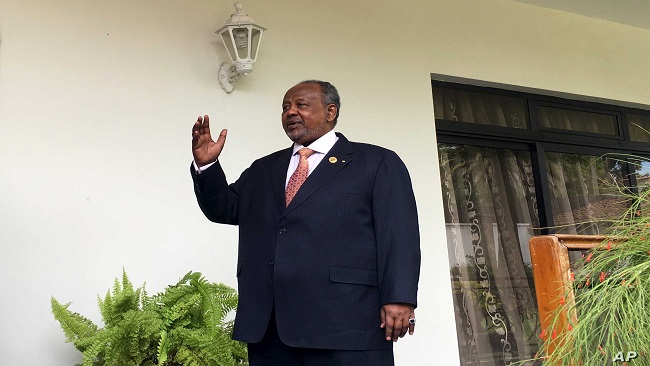
The Horn of African country of Djibouti is going to the polls on Friday as President Ismail Omar Guelleh seeks a fifth term in the small but strategically important nation home to military bases for the United States, China and others.

The 73-year-old Guelleh faces just one challenger, the independent candidate Zakaria Ismail Farah, who halted campaigning early while asserting that he could not do so in safety. In protest, he appeared with his mouth taped shut.

Critics call the president a heavy-handed dictator, but others in Djibouti see him as a driving force in the country’s development and relative stability. The country is located on the Red Sea along one of the world’s busiest shipping lanes.

Guelleh has been in power since 1999 after the death of his predecessor, Hassan Guled Aptidon, the country’s first president. Djibouti won independence from France in 1977.

Guelleh told reporters days ago that he was no longer interested in power but was merely responding to the will of the people.

“It is my people, the Djiboutians, who asked me to run again and not leave them for the sake of the prosperity of the nation,” he said.

More than 205,000 people are registered to vote in Djibouti, which has a population of over 600,000. The country is a mix of ethnic Somali, Afar and Arab.

(AP)

CPDM Crime Syndicate: Dialysis patients protest poor treatment, equipment shortage in Yaoundé

8, April 2021

CPDM Crime Syndicate: Dialysis patients protest poor treatment, equipment shortage in Yaoundé 0

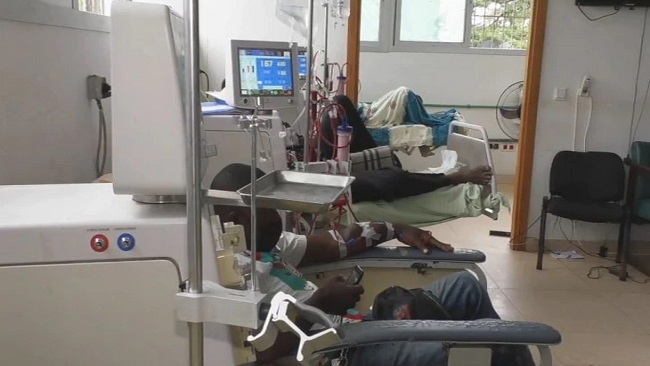
Scores of Cameroonians with kidney failure and their relatives have blocked traffic since Monday around a Yaoundé hospital to protest a shortage of dialysis treatment.  Cameroon authorities blame administrative procedures and coronavirus disruptions for slowing the import of dialysis machines and medicines. 

Traffic was at a standstill in Yaounde’s Melen neighborhood this week as hundreds of patients with kidney failure, and their relatives, protested a halt to treatment at the Yaoundé University Teaching Hospital.

Among the kidney patients who sat or lay on the road in front of the hospital is 54-year-old Emmanuel Pierre Essi.

He says their protest began on Monday after at least seven kidney patients died within three weeks due to lack of treatment.

Essi says he and many of his peers may die after missing at least six sessions of hemodialysis for the past two weeks.  He says the Yaoundé University Teaching Hospital has only five hemodialysis machines for over 160 patients.  Essi says old age and overuse have crumbled the machines and patients who need four hours of dialysis per session, now take seven hours to filter and purify their blood in the dialysis machine.  He says kidney patients also lack hemodialysis kits and dialysis fluid.

Cameroonian health officials are pleading with the patients to halt their protest while the government tries to fix the problems.

The government says that since the coronavirus pandemic began last year, it has been unable to import dialysis equipment and medicine from suppliers abroad due to travel restrictions and the economic slowdown.

The hospital’s deputy director, Felicien Ntone, says officials are trying to secure the equipment needed for dialysis treatment. 

He says Cameroon and its suppliers in Europe and China are examining the best possible ways to speed the shipment of dialysis kits and dialysis machine spare parts to Cameroon.  Ntone says the government has agreed to urgently release funds for the purchase of hemodialysis kits.

Ntone says kidney patients who become critical will be transferred to other dialysis centers.

He says hospitals are negotiating with the government to allow the buying of medicines and equipment without passing through a long procurement process.

Meanwhile, on the third day of the demonstration, some of the protesters are refusing to back down. 

Yaoundé University student Donald Yaje’s parent has kidney failure.  Yaje vows to keep protesting until the government provides the needed treatment.

“We cannot be indifferent while our relatives are dying,” he said.  “We want the government to look for a way of importing equipment instead of always complaining that the coronavirus has [imposed] restrictions to the shipment of goods from Europe.  They should not forget kidney patients while struggling to stop corona.”

Cameroonian health authorities say the country has about 2,500 patients with acute kidney infections, up from 400 in 2012.  

There are about seven towns in Cameroon with dialysis centers, with five dialysis machines at each.  

Yaoundé has two such centers — the largest with 20 dialysis machines.  But health authorities acknowledge they are often not working as a result of overuse and poor power supply.  

Source: VOA

Expulsion of French Cameroun Diplomat: Biya treads gingerly with Biden

8, April 2021

Expulsion of French Cameroun Diplomat: Biya treads gingerly with Biden 0

Fearful of attracting the ire of a Biden administration that is already rather ill-disposed towards Yaoundé, the Cameroonian foreign ministry is staying silent in the wake of the expulsion of one of its diplomats from the United States over allegations of ill-treatment.

The new U.S. Administration sent Minister Laurent Esso’s niece, Michelle Esso, who has been the chief spy out of the United States and she has been declared persona non grata.

The US has already indicated that Cameroon is a country which needs to be watched very carefully because of the gross human rights abuses taking place in the country, especially within the context of the Southern Cameroons crisis.

President Biden clearly holds that the Yaoundé government is persecuting Southern Cameroonians for purely linguistic purposes.

Michelle Esso is paying a huge price for working for the ruling CPDM crime syndicate in Yaoundé and some of the errors and sins of her uncle, Laurent Esso, who is the current Minister of State, Justice and Keeper of the Seal that has usurped power and has opted to make things terribly hard for Cameroonians.

By Chi Prudence Asong with files from Soter Agbaw-Ebai and Africa Intelligence

‘Sofagate’: Turkey lays blame on EU for seating scandal that left EU chief standing

8, April 2021

‘Sofagate’: Turkey lays blame on EU for seating scandal that left EU chief standing 0

Turkey on Wednesday blamed the EU for seating arrangements that left European Commission chief Ursula von der Leyen without a chair during a meeting with President Recep Tayyip Erdogan.

Erdogan and Turkish officials came under a torrent of criticism after images went viral of his meeting on Tuesday with von der Leyen and European Council president Charles Michel in Ankara.

The well-appointed room which the three leaders entered had only two chairs arranged next to the corresponding EU and Turkish flags.

Erdogan and Michel quickly seated themselves while von der Leyen — whose diplomatic rank is the same as that of the two men — was left standing.

“Ehm,” she said pointedly, while appearing to spread her arms in wonder.

Official images later showed her seated on a sofa opposite one taken by Turkish Foreign Minister Mevlut Cavusoglu.

Cavusoglu said on Thursday that criticism levelled against Turkey for the diplomatic blunder was “unfair”.

“The seating arrangements were made in line with the EU suggestion. Period. We would not be revealing this fact had accusations not been made against Turkey,” Cavusoglu told reporters.

“The demands and suggestions of the EU side were met and the proper protocol applied during the meeting,” he said.

‘Turkish hospitality’

The diplomatic faux pas was instantly branded “sofagate” on Twitter and became the dominant talking point of the first Turkey-EU summit in a year.

The meeting was aimed at setting a more positive tone to relations after months of trouble on multiple fronts.

But it ended with European officials accusing Turkey — which last month withdrew from the landmark Istanbul Convention combatting gender-based violence — of male chauvinism.

“First they withdraw from the Istanbul Convention and now they leave the President of European Commission without a seat in an official visit. Shameful. #WomensRights,” wrote Spanish European Parliament member Iratxe Garcia Perez.

Some also questioned why Michel was so quick to take a seat.

The European Council president broke nearly a full day of silence on Wednesday by writing on Facebook that he realised that the scene gave “the impression that I was oblivious to this situation”.

But Michel blamed it on a “protocol blunder” by Turkey that he and von der Leyen decided to overlook at the time.

The two EU leaders “chose not to worsen it by making a public incident,” Michel wrote.

“I am sad that this situation eclipsed the major and beneficial geopolitical work that we carried out together in Ankara, and of which I hope Europe will reap the benefits.”

Von der Leyen herself used a post-summit press conference to stress that she had a detailed discussion with Erdogan about women’s rights.

“I am deeply worried about the fact that Turkey withdrew from the Istanbul Convention,” she said.

European Commission spokesman Eric Mamer said the incident had “sharpened her focus on the issue”.

But Cavusoglu said Turkey knew perfectly how to follow diplomatic protocol and was simply complying with the instructions of a planning delegation sent by Brussels.

“Turkey is a well-established state that hosts guests often and at every level,” he said.

“The meetings — especially in Turkey — are held within the frame of international protocol rules and Turkish hospitality.”

Source: AFP

CEMAC region is hosting the world’s longest-standing authoritarian rulers! But protests are growing

8, April 2021

CEMAC region is hosting the world’s longest-standing authoritarian rulers! But protests are growing 0

In a familiar pattern than continues to be repeated, President Idriss Déby looks set to be elected for yet another term in Chad following this Sunday’s presidential elections. In power since 1990, this will be the 68-year-old incumbent’s sixth term.

President Déby’s victory at the ballot box may be all but assured, but that’s not to say he doesn’t face significant opposition. When he was nominated to be the ruling Patriotic Salvation Movement’s flagbearer this February, the announcement sparked widespread demonstrations. In the capital N’Djamena and other major cities, protesters took to the streets chanting “no to a sixth term!” and “Leave, Déby!”.

The government has responded with force. Authorities arrested hundreds of protesters. They charged several with assault and disturbing the public order. In anticipation of more street action, authorities also imposed a blanket ban on protests. Internet restrictions are expected to follow.

This is all characteristic of Déby’s repressive rule and management of the upcoming elections. For years, his government has overseen sustained attacks against human rights defenders, opposition politicians and journalists. One of Chad’s most prominent human rights defender, Baradine Berdeï Targuio, has been detained since January 2020 charged with “subversive activities on social media”. In November 2020, security forces surrounded the premises of several opposition parties and civil society groups, and raided private radio stations including Radio FM Liberté.

Amid this increasingly unequal playing filed, Chad’s main opposition leader, Saleh Kebzabo, quit the presidential race in early-March. His decision came shortly after two people were killed as security forces tried to arrest his fellow opposition leader Yaya Dillo.

A regional problem

Since he came to power via a coup in 1990, President Déby has won every election and amended the constitution twice to facilitate his stay in power. His 2005 constitutional revision removed the two-term limit. The 2018 amendments re-imposed it, but ensured it would not apply retroactively while also extending presidential mandates from five years to six. This means Déby could now stay in power until 2033.

This determination to cling onto power, along with the brutal treatment of opponents, is consistent with the broader picture in Central Africa. Throughout this region, politics has been militarised and electoral periods are characterised by violence and instability. Authorities target anyone who speaks out – from human rights organisations and the political opposition to trade unions – and presidents maintain a tight grip on power.

Equatorial Guinea’s Teodoro Obiang and Cameroon’s Paul Biya are two of the world’s longest serving presidents, having been in office for 42 and 39 years respectively. The Republic of Congo’s Denis Sassou Nguesso of the Republic of Congo is referred to by some as an “Emperor”, having ruled for 36 years over two periods. Gabon’s Ali Bongo has been president for a comparatively brief 12 years but was preceded by his father who ruled for the 42 years before that.

Along with undemocratic and repressive domestic policies, several Central African leaders’ stays in power have been made possible by international complicity. Chad is a strategic US ally in the campaign against Islamist insurgencies in the Chad Basin. Cameroon, Congo and Gabon are among the last bastions of French influence in Francophone Africa. The Central African Republic has presented a useful opportunity for Russia to expand its international standing.

These alliances of convenience have often provided authoritarian governments with crucial support and funding – some of which has financed security forces that then commit the same kinds of abuses as the groups they are meant to be targeting – while also shielding undemocratic leaders from international censure.

Pushing back

As seen in Chad, people across Central Africa are not staying silent. Civil society groups in the Congo and Cameroon, for example, are increasingly speaking out against state excesses and calling for political reforms, starting with free and fair elections and adherence to term limits. Despite the risks, protests against rising costs of living, increasing inequality and the monopolisation of power by ruling elites are growing. Repeats of Sudan’s 2019 uprising, which ended Omar al-Bashir’s three-decade reign, cannot be ruled out.

To support these movements and help reverse Central Africa’s authoritarian trend, regional and international civil society organisations should start building networks across the region. They should bolster groups that work on the ground to encourage people and governments to move towards democracy. At the same time, they should demand that foreign governments look beyond their own narrow strategic interests and recognise the impact of the militarisation of politics and the use of violence against civil society, the media and opposition.

Without this support, local civil society will struggle to push back against authoritarian leaders. They need broader support as they attempt to prevent leaders like President Déby extending his undemocratic rule and, in the longer-term, resist the plans of ageing presidents to follow in Gabon’s footsteps by converting their individual reign into dynastic rule, further extending the cycle of human rights violations and repression.

Culled from African Arguments

«< 538 539 540 541 542 >»

Featured

  • Biya is already in Hell as Yaoundé unravelsBiya is already in Hell as Yaoundé unravels
  • What does President Biya really want? Money, women or cigarettes?What does President Biya really want? Money, women or cigarettes?
  • Biya, how long must the nation wait for the government it was promised?Biya, how long must the nation wait for the government it was promised?
  • Cameroonians in Leicester: funeral contributions must never become a marketplace for corruptionCameroonians in Leicester: funeral contributions must never become a marketplace for corruption
  • Atanga Nji’s Samuel Eto’o comment: Cameroon does not need bombastic declarationsAtanga Nji’s Samuel Eto’o comment: Cameroon does not need bombastic declarations

Most Commented Posts

  • 4 Anglophone detainees killed in Yaounde4 Anglophone detainees killed in Yaounde
    18 comments
  • Chantal Biya says she will return to Cameroon if General Ivo Yenwo, Martin Belinga Eboutou and Ferdinand Ngoh Ngoh are sackedChantal Biya says she will return to Cameroon if General Ivo Yenwo, Martin Belinga Eboutou and Ferdinand Ngoh Ngoh are sacked
    13 comments
  • The Anglophone Problem – When Facts don’t LieThe Anglophone Problem – When Facts don’t Lie
    12 comments
  • Anglophone Nationalism: Barrister Eyambe says “hidden plans are at work”Anglophone Nationalism: Barrister Eyambe says “hidden plans are at work”
    12 comments
  • Largest wave of arrest by BIR in BamendaLargest wave of arrest by BIR in Bamenda
    10 comments

Latest Tweets

→ Follow me

Featured

  • Kremlin says US mediation role in Russia-Ukraine negotiations on hold

    Kremlin says US mediation role in Russia-Ukraine negotiations on hold

  • Football: Bayern Munich eye €50m move for Yann Bisseck

    Football: Bayern Munich eye €50m move for Yann Bisseck

  • Southern Cameroons Crisis: Suspected Ambazonia fighters kill two students in Bambui

    Southern Cameroons Crisis: Suspected Ambazonia fighters kill two students in Bambui

  • Biya is already in Hell as Yaoundé unravels

    Biya is already in Hell as Yaoundé unravels

  • Child Benefit: Biya regime audit families after 55% jump in declared children

    Child Benefit: Biya regime audit families after 55% jump in declared children

  • BEAC halts key refinancing facility for productive investments across CEMAC

    BEAC halts key refinancing facility for productive investments across CEMAC

  • Biya leaves for Europe as Yaoundé await new cabinet

    Biya leaves for Europe as Yaoundé await new cabinet

Log In

  • Register
  • Log in
  • Entries feed
  • Comments feed
  • WordPress.org
© Cameroon Concord News 2026

We are using cookies to give you the best experience on our website.

You can find out more about which cookies we are using or switch them off in .

Powered by  GDPR Cookie Compliance
Privacy Overview

This website uses cookies so that we can provide you with the best user experience possible. Cookie information is stored in your browser and performs functions such as recognising you when you return to our website and helping our team to understand which sections of the website you find most interesting and useful.

Strictly Necessary Cookies

Strictly Necessary Cookie should be enabled at all times so that we can save your preferences for cookie settings.

3rd Party Cookies

This website uses Google Analytics to collect anonymous information such as the number of visitors to the site, and the most popular pages.

Keeping this cookie enabled helps us to improve our website.

Cookie Policy

More information about our Cookie Policy